
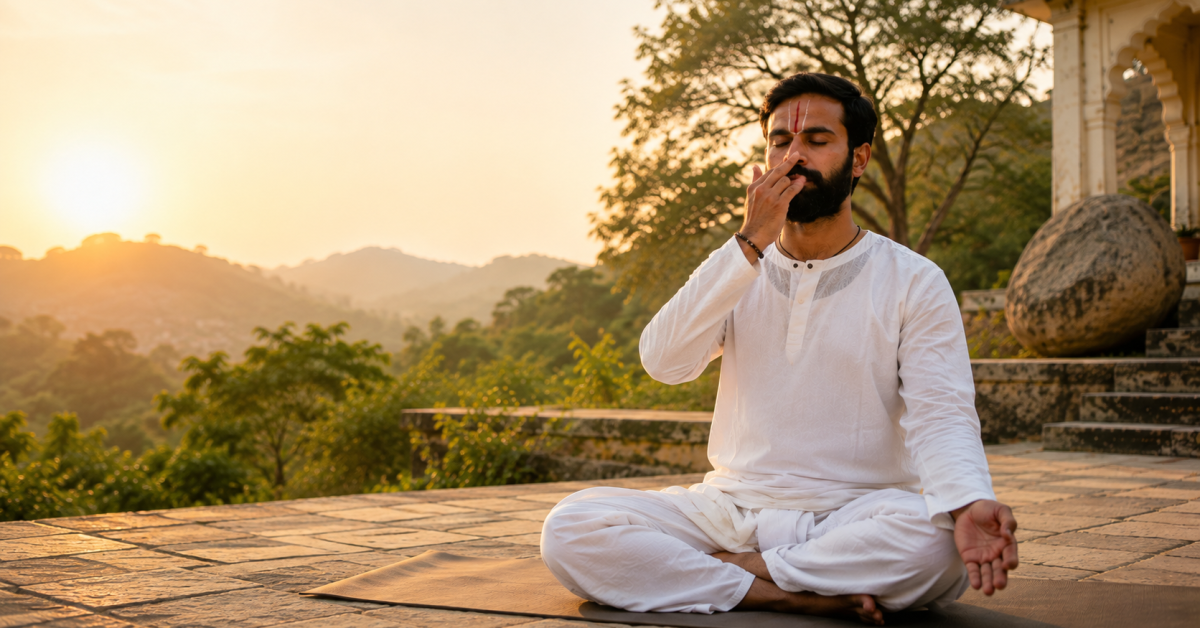
Modern life often brings stress, mental fatigue, and constant distractions. While exercise and healthy eating support overall wellness, learning to control your breath can have an equally powerful effect on your mind. This is why many people are now exploring Pranayama Techniques for Stress Relief as a natural way to improve emotional balance and inner calm.
At Sanatan Yog, pranayama is taught as an essential part of traditional Hatha Yoga. Every breathing practice helps calm the nervous system, improve concentration, and prepare the mind for meditation. When practiced regularly, pranayama becomes a simple daily habit that supports both physical and mental well-being.
What Is Pranayama?
Pranayama is the traditional yogic practice of controlling and expanding the breath. The word comes from the Sanskrit words Prana, meaning life energy, and Ayama, meaning expansion or control. Instead of simply breathing automatically, pranayama teaches you to breathe with awareness and purpose.
Unlike ordinary breathing, pranayama creates a deeper connection between the body and mind. This mindful approach helps improve focus, reduce mental tension, and increase overall vitality.
Why Breath Is So Important
Breathing happens naturally, but most people take short and shallow breaths during stressful situations. Pranayama encourages slow, steady breathing, allowing the body to relax while improving oxygen flow throughout the system.
How Does Pranayama Help Reduce Stress?
Stress affects both the body and the mind. It can increase muscle tension, disturb sleep, and make it difficult to concentrate. Practicing Pranayama Techniques for Stress Relief activates the body’s natural relaxation response by slowing the breath and calming the nervous system.
As breathing becomes slower and more controlled, the heart rate gradually settles, helping the mind feel more peaceful. This simple practice makes it easier to manage daily challenges with greater clarity and emotional balance.
A Natural Way to Calm the Mind
Unlike temporary solutions, pranayama helps develop long-term resilience against stress. Regular practice encourages relaxation without depending on external distractions, making it a valuable habit for everyday life.
Why Should Beginners Start with Simple Pranayama?
Many people believe pranayama is difficult, but beginners can safely start with basic breathing techniques. Simple practices help develop breath awareness before moving to more advanced methods. This gradual approach builds confidence while allowing the lungs and nervous system to adapt naturally.
Learning under proper guidance also helps beginners develop correct breathing habits from the very beginning.
Start Slowly and Stay Consistent
You do not need to practice for long hours. Even 10 to 15 minutes of daily pranayama can improve relaxation, concentration, and emotional well-being when practiced consistently.
Benefits of Practicing Pranayama Daily
| Daily Practice | Long-Term Benefit |
|---|---|
| Deep breathing | Helps calm the nervous system |
| Mindful breathing | Improves concentration |
| Slow breathing | Reduces everyday stress |
| Regular practice | Supports emotional balance |
| Controlled breathing | Increases lung efficiency |
| Breath awareness | Encourages mindfulness |
Technique 1: Deep Belly Breathing (Diaphragmatic Breathing)
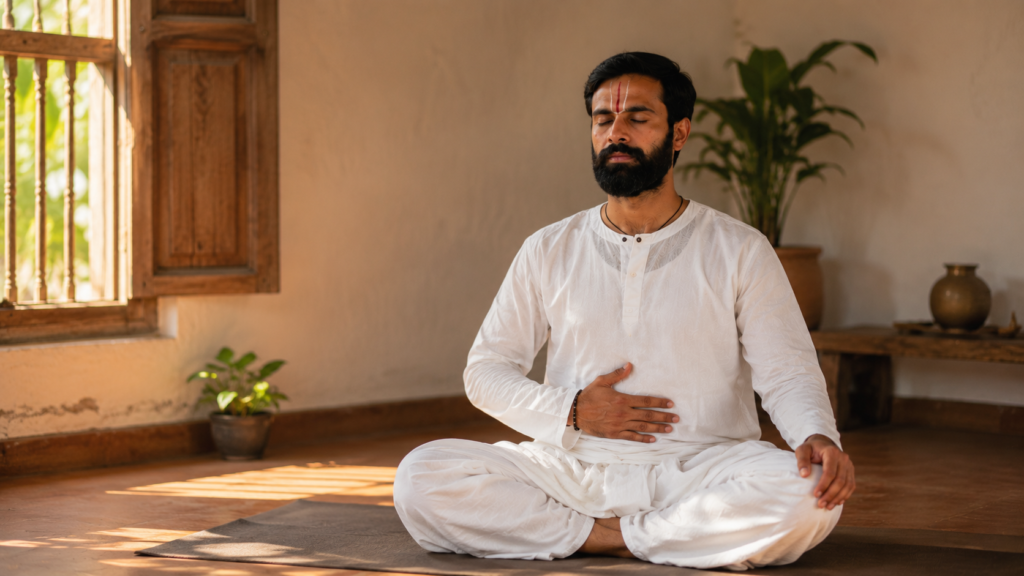
Deep Belly Breathing is one of the easiest Pranayama Techniques for Stress Relief and is ideal for beginners. Sit comfortably, place one hand on your abdomen, and breathe slowly through your nose. Allow your abdomen to rise as you inhale and gently fall as you exhale.
This technique encourages full lung expansion and helps release physical tension caused by stress.
Focus on Slow, Gentle Breaths
Avoid forcing your breath or breathing too quickly. A slow and comfortable rhythm allows the body to relax naturally while improving mental clarity and emotional stability.
Technique 2: Nadi Shodhana (Alternate Nostril Breathing)
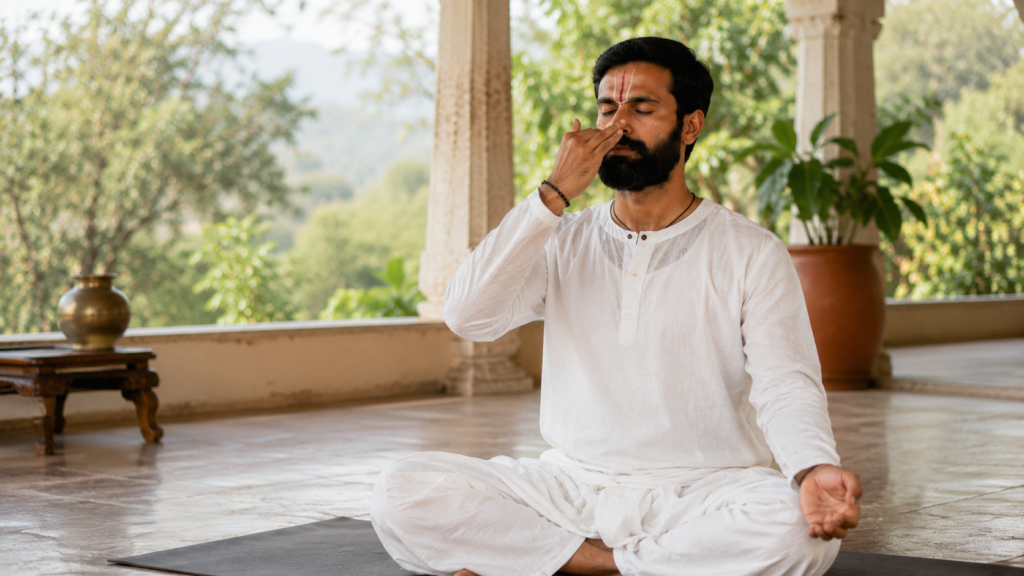
Nadi Shodhana is one of the most respected breathing practices in traditional yoga. It involves breathing through one nostril at a time while gently closing the opposite nostril with your fingers. This balanced breathing pattern helps quiet the mind and improve focus.
Many practitioners use this technique before meditation because it creates a calm and centered state of mind.
Restore Mental Balance
Practicing Nadi Shodhana regularly helps reduce mental restlessness while improving concentration. It is an excellent technique for people who experience stress due to busy schedules or constant mental activity.
Technique 3: Bhramari Pranayama (Bee Breathing)
Bhramari Pranayama is one of the most calming Pranayama Techniques for Stress Relief. Sit comfortably with your spine straight, close your eyes, and gently produce a soft humming sound while exhaling. The vibration created during the practice helps relax the mind and reduce mental tension.
This breathing technique is especially helpful after a busy day or whenever you feel emotionally overwhelmed.
Relax Your Mind Naturally
Practice the humming sound slowly without forcing your breath. As you continue, your breathing becomes smoother, helping you feel calmer, more focused, and emotionally balanced.
Technique 4: Ujjayi Pranayama (Victorious Breath)
Ujjayi Pranayama involves slow breathing through the nose while gently narrowing the throat to create a soft ocean-like sound. This technique improves breath control and helps maintain focus during yoga practice.
Many Hatha Yoga practitioners use Ujjayi breathing because it creates a steady rhythm between movement and breath.
Build Calmness with Every Breath
Practice Ujjayi gently without creating loud sounds. A smooth and comfortable rhythm improves concentration while reducing stress and promoting inner awareness.
Technique 5: Sheetali Pranayama (Cooling Breath)
Sheetali Pranayama is known for its cooling and refreshing effect on the body. It is often practiced during warm weather or after physical activity to calm the body and mind. Slow, mindful breathing helps reduce restlessness and creates a feeling of relaxation.
Beginners should practice this technique gently and avoid forcing long inhalations.
Feel Refreshed and Relaxed
A few minutes of Sheetali Pranayama can help you feel lighter and more peaceful. It is an excellent practice when stress is accompanied by physical heat or irritability.
Daily Pranayama Routine for Beginners
A simple routine helps beginners build consistency without feeling overwhelmed. Practicing for just a few minutes each day is often more beneficial than long, irregular sessions.
Start with gentle breathing exercises, then gradually increase your practice as your confidence and breath control improve.
Suggested Daily Routine
| Practice | Duration |
|---|---|
| Deep Belly Breathing | 3 Minutes |
| Nadi Shodhana | 5 Minutes |
| Bhramari Pranayama | 3 Minutes |
| Ujjayi Pranayama | 2 Minutes |
| Short Meditation | 5 Minutes |
Which Pranayama Technique Is Best for Stress Relief?
Every breathing technique offers unique benefits, but beginners often find Deep Belly Breathing and Nadi Shodhana the easiest to learn. As confidence grows, Bhramari and Ujjayi can become valuable additions to a daily routine.
The best approach is to practice consistently and choose techniques that feel comfortable for your body and breathing pattern.
Choose Comfort Over Complexity
There is no need to learn every technique at once. Mastering a few simple practices with proper guidance produces better long-term results than rushing into advanced breathing exercises.
Common Mistakes Beginners Should Avoid
Learning proper breathing habits from the beginning makes pranayama safer and more effective. Many beginners unknowingly make small mistakes that reduce the benefits of practice.
Practice Mindfully
Avoid holding your breath for too long, breathing too forcefully, or practicing immediately after a heavy meal. Sit comfortably, keep your spine straight, and allow your breathing to remain smooth and natural.
Common Mistakes and Better Practices
| Common Mistake | Better Practice |
|---|---|
| Breathing too fast | Slow down your breathing naturally |
| Forcing deep breaths | Breathe comfortably without strain |
| Practicing after meals | Practice on an empty stomach or after digestion |
| Poor sitting posture | Keep the spine upright and relaxed |
| Skipping daily practice | Practice regularly, even for 10–15 minutes |
Safety Tips Before Practicing Pranayama
Pranayama should always feel calm and comfortable. If you experience dizziness, discomfort, or difficulty breathing, stop the practice and return to normal breathing. Beginners should avoid advanced breath-retention techniques until they receive guidance from a qualified yoga teacher.
Listening to your body is one of the most important principles of authentic yoga practice.
Benefits of Regular Pranayama Practice
| Regular Practice | Benefit |
|---|---|
| Deep breathing | Helps reduce stress and tension |
| Nadi Shodhana | Improves focus and emotional balance |
| Bhramari | Promotes relaxation and mental calmness |
| Ujjayi | Develops breath awareness and concentration |
| Daily practice | Supports overall physical and mental well-being |
Why Learn Pranayama at Sanatan Yog?
At Sanatan Yog, pranayama is taught through the authentic traditions of Hatha Yoga. Students learn proper breathing techniques step by step while understanding their connection with meditation, mindfulness, and overall well-being.
Every class is guided by experienced teachers who help students develop safe breathing habits in a peaceful and supportive environment. This traditional approach makes pranayama accessible for beginners while helping experienced practitioners deepen their practice.
Frequently Asked Questions
Deep Belly Breathing, Nadi Shodhana, and Bhramari Pranayama are among the most effective techniques for calming the mind and reducing everyday stress.
Beginners can start with 10–15 minutes of daily practice and gradually increase the duration as they become more comfortable.
Yes. Daily practice supports better breathing, improved concentration, emotional balance, and overall well-being.
Yes. Practicing pranayama before meditation helps calm the mind, making it easier to focus and relax.
Yes. Simple breathing techniques are generally safe when practiced gently and under proper guidance. Avoid forcing your breath or attempting advanced techniques without instruction.
Conclusion
Practicing Pranayama Techniques for Stress Relief is one of the simplest and most natural ways to improve mental well-being. Through mindful breathing, you can calm the nervous system, reduce everyday stress, improve concentration, and create a greater sense of inner balance. Even a few minutes of daily practice can make a meaningful difference over time.
If you want to learn authentic pranayama through traditional Hatha Yoga, Sanatan Yog provides expert guidance in a peaceful learning environment. With experienced teachers and a holistic approach, you can develop lifelong breathing habits that support both physical health and emotional wellness.
