

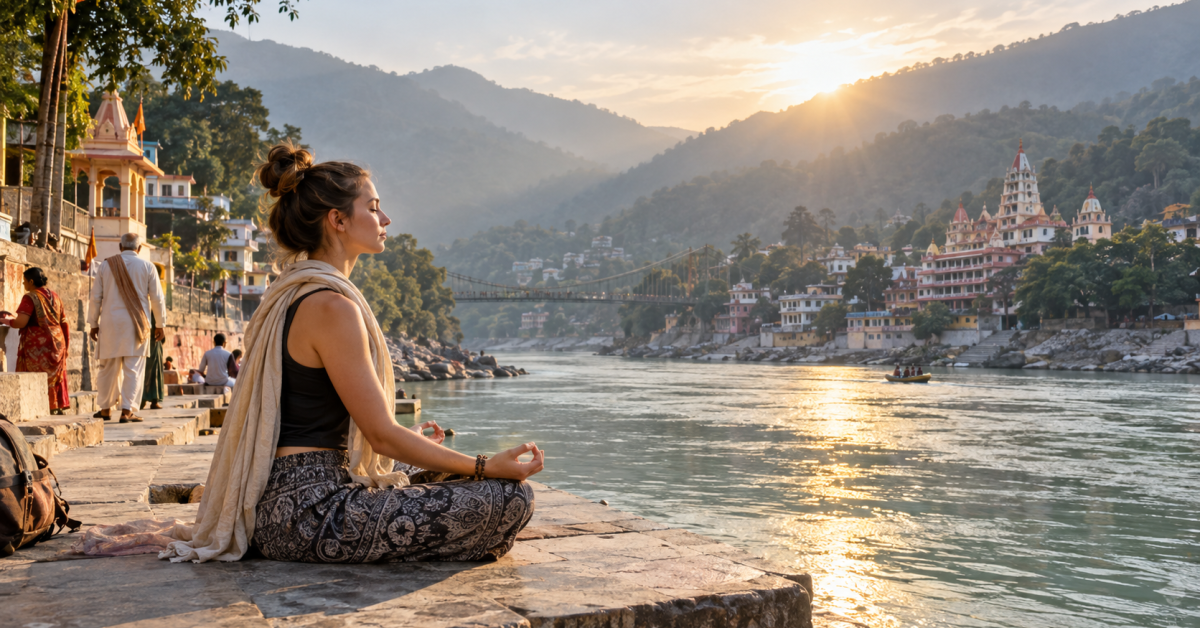
If you are planning to come to India to practise yoga, one of the first questions you may have is: The Best Places To Do Yoga In India For Foreigners? The answer is not one fixed destination. India has very different yoga communities, landscapes, teaching traditions, and travel experiences, so the right place depends on what you want from your stay.
Rishikesh is known for its large yoga and ashram community, Mysore has a strong connection with Ashtanga, Goa combines yoga with a relaxed coastal lifestyle, and Kerala is popular with travellers who want yoga alongside Ayurveda and wellness. Pushkar offers something different, with yoga surrounded by temples, sacred spaces and the culture of Rajasthan.
This article compares the main destinations and looks at what each place offers, who it may suit, when to visit, and what foreign travellers should check before booking a class or retreat.
The Best Places To Do Yoga In India For Foreigners
There is no single type of yoga experience in India.
Some centres focus mainly on asana and physical practice. Others include pranayama, meditation, philosophy, mantra, chanting and other traditional practices. Residential retreats can also include accommodation, meals and cultural activities, while a regular drop-in class may simply be a one- or two-hour session.
For international visitors, the difference is important.
| Destination | Best suited for | Main experience | General atmosphere |
|---|---|---|---|
| Rishikesh | Traditional yoga and ashram experience | Hatha, meditation, pranayama, philosophy | Spiritual and busy |
| Pushkar | Yoga and cultural immersion | Hatha, Ashtanga, meditation, philosophy | Spiritual and intimate |
| Mysore | Ashtanga practitioners | Ashtanga Vinyasa | Focused and disciplined |
| Goa | Yoga with a beach holiday | Hatha, Vinyasa and mixed styles | Relaxed and social |
| Kerala | Yoga and Ayurveda | Yoga, meditation and wellness | Tropical and peaceful |
| Dharamshala | Mountains and meditation | Hatha, pranayama and meditation | Quiet and reflective |
| Varanasi | Spiritual and cultural experience | Yoga alongside traditional life | Intense and ancient |
| Pune | Serious yoga study | Established traditional schools | Urban and study-focused |
These destinations are commonly highlighted in current travel and yoga resources, but their strengths are quite different. Rishikesh is particularly known for its broad yoga ecosystem, Mysore for Ashtanga, Goa for beach-based practice, Kerala for yoga and Ayurveda, and Dharamshala for its mountain setting and meditation culture.
1. Rishikesh, Uttarakhand
Rishikesh is one of the first places international students consider when planning a yoga trip to India.
The city sits on the Ganges near the Himalayan foothills and has a large network of ashrams, yoga schools, meditation centres and teacher-training programmes.
For a foreign visitor, one of its biggest advantages is variety.
You can find beginner classes, residential programmes, meditation courses, philosophy sessions and longer teacher-training courses in the same general area.
What can you expect in Rishikesh?
A yoga stay may include:
- Hatha Yoga
- Pranayama
- Meditation
- Yoga philosophy
- Ashram-style routines
- Ganga-side walks
- Temple visits
- Evening aarti
- Vegetarian meals
Rishikesh can be a good choice if you want yoga to become the main focus of your trip. At the same time, its popularity means that the quality, teaching style and class structure can differ considerably between centres.
Before booking, check who teaches the programme, how many students are in a class, how much practice is included each day, and whether the course is suitable for your experience level.
2. Pushkar, Rajasthan
Pushkar has a very different atmosphere from Rishikesh.
The town is built around the sacred Pushkar Lake and is surrounded by temples, ghats, markets and the desert landscape of Rajasthan. For many visitors, the smaller scale of the town makes it easier to combine yoga with cultural exploration.
For someone considering The Best Places To Do Yoga In India For Foreigners, Pushkar is especially interesting because the practice can become part of a wider Indian experience.
You can attend a morning yoga class, spend time around the lake, visit temples, explore the local streets and return to a quieter environment later in the day.
Yoga in Pushkar with Sanatan Yog
Sanatan Yog is based at Balmukund Ashram on Jumni Kund Road in Pushkar. Its official website presents the centre around traditional yoga and lists Hatha Yoga, Ashtanga Vinyasa, meditation, philosophy and other yogic practices among its offerings.
The current daily schedule includes sound healing meditation, Ashtanga Vinyasa, yoga philosophy, Hatha Yoga and an evening kirtan session with mantra chanting. The centre also offers offline classes, online classes, retreats and teacher training.
This can be particularly useful for foreign travellers who want to experience yoga as more than a physical exercise class.
Sanatan Yog’s current retreat offerings also combine yoga with meditation, sound healing, yogic philosophy, sacred rituals and cultural experiences. Its 2026 Element Bliss Retreat in Pushkar, for example, includes Hatha Yoga, meditation, sound healing, element pooja, Kalbeliya dance, temple visits and Karma Yoga.
3. Mysore, Karnataka
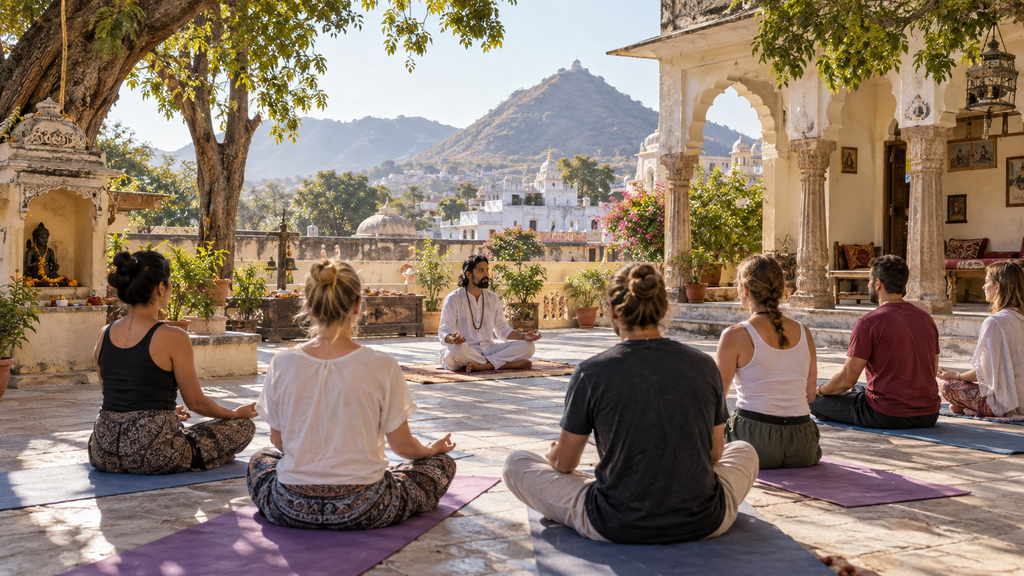
Mysore is particularly important for people interested in Ashtanga Yoga.
The city has attracted practitioners from around the world who come specifically to establish a regular practice and study the Mysore-style method.
Instead of everyone moving through a class at exactly the same pace, students generally work through their practice with individual guidance from the teacher.
Mysore may be suitable if you:
- Want to focus mainly on Ashtanga
- Prefer a disciplined daily routine
- Already have some yoga experience
- Want to spend several weeks practising
- Prefer consistent instruction
Mysore may not be the first choice for someone looking for a relaxed holiday with occasional yoga classes.
For a student whose main purpose is developing an Ashtanga practice, however, it remains one of India’s most significant destinations. Current travel research also identifies Mysore as the major destination for serious Ashtanga practice.
4. Goa
Goa offers a much more relaxed setting.
Yoga here is often combined with beaches, cafés, nature and a social international travel scene. This makes it attractive to visitors who want to practise regularly without spending their entire holiday inside an ashram.
Depending on the centre, you may find:
- Hatha Yoga
- Vinyasa
- Yin Yoga
- Meditation
- Sound healing
- Yoga retreats
- Teacher training
Goa can work especially well for someone who wants yoga to be part of a holiday rather than the only purpose of the trip.
North Goa has a particularly active yoga and wellness scene, while quieter parts of South Goa can suit travellers who prefer fewer crowds. The main season for many beach-based yoga programmes is generally during the drier months.
5. Kerala
Kerala is a strong option for travellers interested in yoga, Ayurveda and a slower style of wellness travel.
The state’s tropical surroundings, beaches and backwaters create a very different setting from Rajasthan or the Himalayan foothills.
A stay in Kerala can combine yoga with:
- Ayurveda
- Meditation
- Healthy food
- Nature
- Rest and recovery
- Wellness programmes
Places such as Varkala and Kovalam are particularly popular with wellness travellers. Current travel sources also highlight Kerala for combining yoga with Ayurveda and broader wellness programmes.
If your main goal is intensive study of one specific yoga tradition, another destination may suit you better. If you want yoga to be part of a longer wellness stay, Kerala can be a comfortable choice.
6. Dharamshala and McLeod Ganj
Dharamshala brings yoga into a mountain setting.
Located in Himachal Pradesh, the region has views of the Dhauladhar range and a strong international traveller community. McLeod Ganj and nearby areas such as Dharamkot are known for yoga, meditation, nature and Tibetan cultural influences.
For many visitors, the surroundings are a major part of the experience.
You can combine yoga with:
- Mountain walks
- Meditation
- Quiet mornings
- Nature
- Tibetan cultural experiences
- Personal study
Dharamshala is particularly appealing to travellers who do not want the busy atmosphere found in larger yoga destinations. Current destination comparisons also place the region among India’s notable options for meditation and mountain-based practice.
7. Varanasi
Varanasi is not a conventional yoga retreat destination, but it can offer a powerful cultural experience.
The city lies along the Ganges and is known for its temples, ghats, rituals and pilgrimage traditions. For someone interested in the spiritual and cultural background surrounding yoga, the city can be fascinating.
It is also intense.
The streets can be crowded, noisy and overwhelming, particularly for someone visiting India for the first time.
That makes Varanasi less suitable for travellers who simply want a quiet wellness retreat. It can be much more rewarding for someone who wants yoga to form part of a wider experience of India’s spiritual life. Current travel coverage also identifies Varanasi as an important destination for traditional yoga and spiritual immersion.
8. Pune, Maharashtra
Pune has a long association with established yoga traditions and serious study.
It is particularly connected with the Iyengar tradition and can appeal to students interested in detailed instruction, alignment and structured learning.
The experience is more urban than what you will find in Pushkar, Rishikesh or Dharamshala.
That is not necessarily a disadvantage.
If your priority is learning and regular practice rather than scenery or a retreat atmosphere, Pune can make more sense.
How Do You Pick Between These Destinations?
The best choice depends on the type of experience you want.
If you are looking at The Best Places To Do Yoga In India For Foreigners, start with your practice rather than the name of the city.
For traditional yoga and a large yoga community
Rishikesh is a strong option.
There are many schools, ashrams and programmes, so you can choose between short classes and longer residential study.
For yoga and Indian culture
Pushkar can be a better fit.
The town allows you to combine yoga with temples, the sacred lake, local traditions and Rajasthan’s cultural atmosphere.
For Ashtanga
Mysore is the obvious choice for many dedicated practitioners.
The city’s yoga culture is strongly connected with regular Ashtanga practice.
For yoga and the beach
Goa gives you the flexibility to practise in the morning and enjoy the coast afterwards.
For yoga and Ayurveda
Kerala is particularly suitable.
Yoga can be combined with a wider wellness programme and Ayurvedic experiences.
For mountains and quiet
Dharamshala offers a cooler Himalayan setting and a slower pace.
For a deep cultural experience
Varanasi is difficult to compare with the other destinations because the city itself becomes part of the experience.
What Should Foreign Travellers Check Before Booking?
For international visitors, choosing a yoga school should involve more than looking at photographs.
Before booking, check:
1. Who teaches the class?
Look for clear information about the teachers, their experience and the tradition they follow.
2. How long is each class?
A 60-minute class and a 90-minute class should not be compared only by their price.
3. What is included?
For a retreat, check accommodation, meals, yoga sessions, meditation, activities, transfers and any additional costs.
4. What level is the programme?
A physically demanding course may not be appropriate for someone who has never practised yoga before.
5. How large are the classes?
A smaller group can provide more opportunity for individual guidance.
6. What type of yoga is actually taught?
If you specifically want Hatha, Ashtanga, meditation or pranayama, make sure the programme includes those practices rather than using the word “yoga” as a general description.
Is Pushkar Good for First-Time Yoga Students?
For many international travellers, it can be.
Pushkar is relatively easy to explore while still offering a strong spiritual atmosphere. A visitor can experience yoga without spending the entire trip inside a retreat centre.
Sanatan Yog currently offers daily drop-in classes alongside residential retreats, which gives visitors different ways to approach their practice. Its schedule includes Hatha Yoga, Ashtanga Vinyasa, meditation, philosophy and kirtan.
This can be useful for someone who wants to attend a class first and consider a longer stay later.
For The Best Places To Do Yoga In India For Foreigners, this flexibility is one of the practical advantages of choosing a destination where both individual classes and residential programmes are available.
How Long Should You Stay?
There is no fixed number of days.
A short stay can give you an introduction to the teacher and the style of practice. Several days allow you to establish a routine and experience more than one part of the programme.
A longer stay makes more sense if you want to spend time on meditation, philosophy, pranayama or deeper personal practice.
For a first trip, there is nothing wrong with starting small.
You can attend a few classes, see how the teaching feels, and then decide whether you want to extend your stay or return for a longer retreat.
When Is a Good Time to Visit?
India’s climate changes considerably from region to region, so there is no single travel season for every yoga destination.
| Destination | Generally comfortable period | What to consider |
|---|---|---|
| Rishikesh | September–April | Summer can become very hot |
| Pushkar | October–March | Rajasthan becomes very hot later in spring |
| Mysore | October–March | Warmer months can be uncomfortable |
| Goa | November–February | Monsoon affects coastal programmes |
| Kerala | September–March | Tropical and humid climate |
| Dharamshala | March–June, September–November | Mountain weather can change quickly |
| Varanasi | October–March | Summer can be extremely hot |
| Pune | November–February | Generally milder winter conditions |
These are broad planning periods rather than guarantees. Check the local weather and the centre’s programme dates before booking.
What Does a Yoga Retreat in India Usually Include?
A retreat can be very different from a normal yoga class.
A regular class generally charges for teaching time. A retreat may include accommodation, meals, several practices each day, meditation, philosophy and cultural activities.
A typical day could look something like:
Morning
Meditation, pranayama and yoga practice.
Late morning
Breakfast, rest or philosophy.
Afternoon
Lunch, free time, reading, sightseeing or personal practice.
Evening
Another practice, meditation, chanting, kirtan or a cultural activity.
Sanatan Yog’s current retreat information reflects this broader approach. Its programmes can include Hatha Yoga, meditation, sound healing, philosophy, sacred rituals, cultural activities and Karma Yoga depending on the retreat.
This is one reason visitors should not compare a retreat price directly with the price of a single drop-in class.
How Much Does a Yoga Trip to India Cost?
There is no single price because the destination and type of programme make a large difference.
A drop-in class is obviously different from a residential retreat with accommodation and meals.
Your total budget can include:
- Yoga classes
- Accommodation
- Food
- Airport or train transfers
- Local transport
- Retreat activities
- Sightseeing
- Travel insurance
- Visa costs
- Personal expenses
Rishikesh and Mysore can offer a wide range of options, while resort-style programmes in Kerala or premium retreats in other destinations can cost considerably more.
For The Best Places To Do Yoga In India For Foreigners, the most useful comparison is therefore not simply the class fee. Look at what you receive for the complete cost of the stay.
What Makes Sanatan Yog Different in Pushkar?
Sanatan Yog presents its teaching through a traditional yoga approach based in Pushkar.
The centre currently lists Hatha Yoga, Ashtanga Vinyasa, meditation, sound healing, philosophy and kirtan among its offerings. Its website also introduces Sanatan Guru Ji as founder, with a focus on Hatha, Ashtanga and philosophy, and Gaurang Guru Ji as co-founder, with a focus on music, meditation and Hatha Yoga.
The current Pushkar programmes also bring yoga together with local cultural experiences. The Element Bliss Retreat, for example, includes temple visits, Kalbeliya dance, Karma Yoga, sacred rituals and traditional yoga practices.
For a foreign traveller, this can be useful if the purpose of the trip is not only to exercise but also to experience yoga within an Indian cultural setting.
What Should You Pack for a Yoga Trip to India?
Keep it simple.
Bring comfortable yoga clothing, light layers appropriate for the season, walking shoes, personal toiletries and any medicines or personal essentials you normally need.
If you are staying at an ashram or visiting temples, modest clothing is a sensible choice.
It is also useful to carry a reusable water bottle, copies of important travel documents and clothing suitable for both yoga practice and local cultural spaces.
Frequently Asked Questions
There is no single destination that suits every foreign traveller. Rishikesh is strong for traditional yoga and a large international community, Mysore for Ashtanga, Goa for beach-based practice, Kerala for yoga and Ayurveda, Dharamshala for mountains and meditation, and Pushkar for yoga combined with spiritual and cultural experiences.
Yes. Pushkar offers a quieter setting than some of India’s larger yoga destinations and allows visitors to combine yoga with temples, the sacred lake and Rajasthan’s local culture. Sanatan Yog currently offers daily classes and residential programmes in Pushkar.
Yes. Many centres have beginner-friendly classes, although the level varies. Always check the programme description before booking, particularly if you are completely new to yoga.
It depends on what you want. Rishikesh has a much larger yoga ecosystem and offers many different schools and programmes. Pushkar can feel smaller and more culturally immersive, particularly for someone interested in combining yoga with meditation and traditional Indian surroundings.
Mysore is the strongest choice for travellers whose main purpose is dedicated Ashtanga practice. Pushkar can also be suitable for students who want Ashtanga alongside Hatha, meditation and philosophy.
Yes. Many centres offer drop-in classes. Sanatan Yog currently lists daily offline classes in Pushkar, so travellers do not necessarily have to book a residential retreat to practise there.
No. Beginners can find suitable classes, but they should avoid assuming that every retreat is beginner-friendly. Check the level, daily schedule and physical demands before booking.
A few days can be enough for a first experience. A longer stay can be useful if you want to develop a regular routine or spend more time with meditation, pranayama and philosophy.
The Best Places To Do Yoga In India For Foreigners: A Simple Answer
If you need a short answer, the destination depends on the experience you want.
Rishikesh is a strong choice for traditional yoga, meditation and ashram life.
Pushkar suits travellers who want yoga alongside spirituality and Rajasthan’s cultural atmosphere.
Mysore is particularly suited to serious Ashtanga practitioners.
Goa works well for yoga combined with a relaxed beach holiday.
Kerala is a natural choice for yoga and Ayurveda.
Dharamshala is better suited to travellers looking for mountains, meditation and a quieter environment.
Varanasi is best approached as a wider spiritual and cultural experience rather than a conventional retreat destination.
Pune can appeal to students looking for established yoga traditions and serious study.
Final Thoughts
There is no single answer to The Best Places To Do Yoga In India For Foreigners because every destination offers a different way of experiencing the practice.
Rishikesh gives you the Ganges, the Himalayas and a large international yoga community. Mysore is closely connected with Ashtanga. Goa brings yoga closer to the sea, while Kerala combines practice with Ayurveda and a slower wellness environment. Dharamshala offers mountain surroundings, and Varanasi places yoga within one of India’s oldest spiritual cities.
Pushkar has its own character.
The sacred lake, temples, narrow streets and Rajasthani culture create an environment where yoga can become part of everyday travel rather than something separated from it. For someone interested in traditional Hatha, Ashtanga, meditation, pranayama and philosophy, Sanatan Yog provides a way to experience these practices in Pushkar while also taking part in cultural and spiritual activities.
The most important thing is to look beyond the destination’s reputation. Check the teacher, the teaching tradition, the daily schedule, the level of the programme and what is actually included in the price.
The Best Places To Do Yoga In India For Foreigners is ultimately the place where the style of teaching, surroundings and pace of the stay match what you came to India to experience.
For some people, that will be Rishikesh. For others, it may be Mysore, Goa, Kerala or Dharamshala.
And for a traveller looking for yoga within the spiritual and cultural setting of Rajasthan, Pushkar may be the place where the journey feels most natural.
