

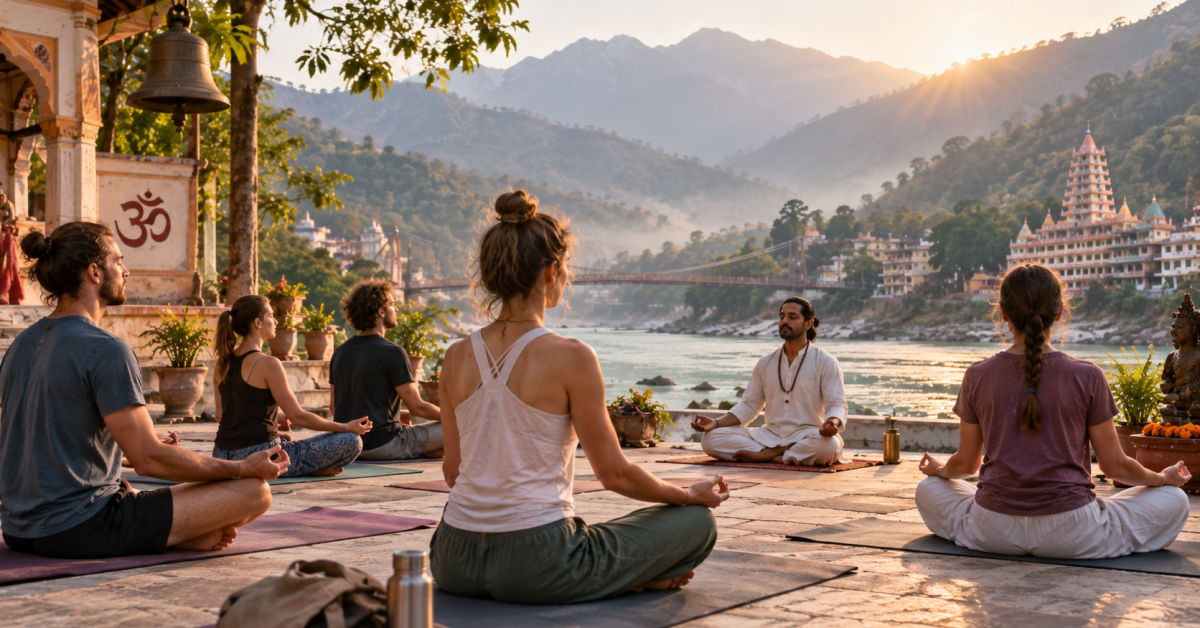
India has a long connection with yoga, and travellers can experience the practice in very different settings across the country. Some places are known for ashrams and meditation, while others are connected with a particular yoga style, Ayurveda, beaches, mountains, or historic culture.
That variety makes the question where to do yoga in India more useful than simply looking for one famous destination. Your choice can depend on the style you want to practise, the length of your stay, your experience level, the climate, and the type of travel experience you want around your classes.
Rishikesh offers a Himalayan and Ganga-side setting, Mysuru has a strong connection with Ashtanga Yoga, Kerala combines yoga with Ayurveda and tropical landscapes, and Varanasi places yoga within a major cultural and spiritual city. Pushkar provides another setting, with traditional yoga alongside Rajasthan’s temples, lake, markets, and local culture.
For travellers interested in Pushkar, Sanatan Yog at Balmukund Ashram offers Hatha Yoga, Ashtanga Vinyasa, meditation, pranayama, yoga philosophy, and kirtan. The school describes its teaching tradition as a four-generation family lineage.
What to Consider Before Selecting a Yoga Destination
The right destination depends on the kind of experience you want from your trip. Someone interested in a structured Ashtanga practice may have different requirements from a traveller looking for meditation, cultural activities, or a relaxed retreat.
Before booking a yoga centre, consider:
- Yoga style and class level
- Teacher experience
- Daily schedule
- Retreat or drop-in classes
- Accommodation
- Food arrangements
- Local transport
- Weather
- Length of stay
- Cultural activities
It is also useful to check whether the centre teaches the practices you actually want. A beautiful location alone does not tell you much about the quality, style, or structure of the classes.
When researching where to do yoga in India, these practical details can make the difference between a simple class visit and a well-planned yoga holiday.
Rishikesh: Yoga Beside the Ganga
Rishikesh is one of India’s most recognised destinations for yoga and spiritual travel. Incredible India describes the city as a place associated with yoga, meditation, ashrams, the Ganga, and the Himalayan landscape.
The environment is a major part of the experience. Travellers can attend a morning class, walk beside the river, visit temples, explore ashrams, and experience evening spiritual activities.
Rishikesh also has a strong international connection with modern yoga tourism. Its ashram culture attracts visitors interested in meditation, yoga study, philosophy, and longer stays.
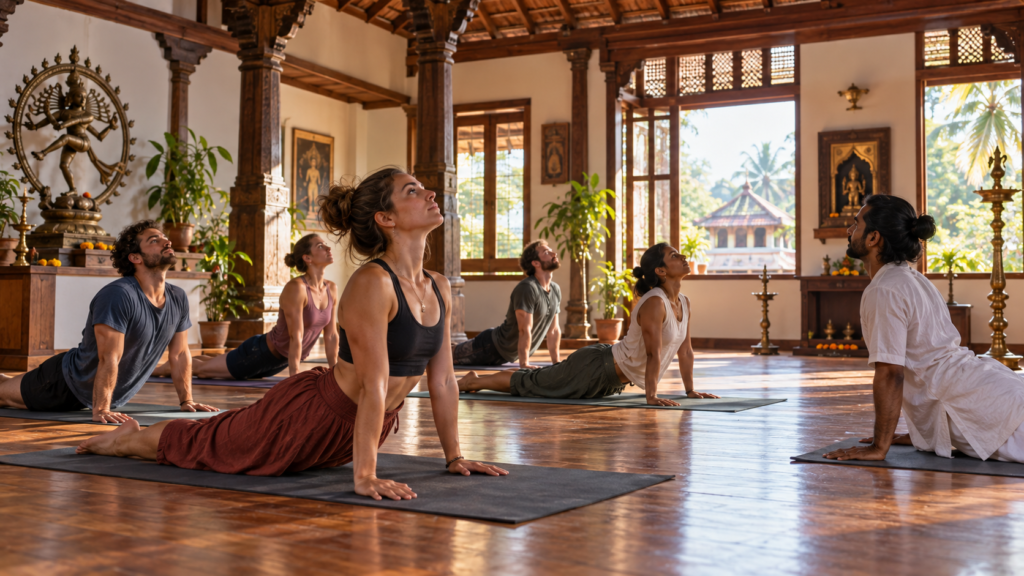
What a Rishikesh Yoga Stay Can Include
A trip may combine:
- Traditional yoga classes
- Meditation
- Pranayama
- Ashram visits
- Ganga-side walks
- Temple visits
- Spiritual ceremonies
- Himalayan sightseeing
The city is busy in many areas, so travellers looking for a quieter experience should check the location of their accommodation and yoga centre carefully.
Mysuru: A Destination for Ashtanga Yoga
Mysuru offers a very different yoga environment. Karnataka Tourism identifies Gokulam as a global centre for Ashtanga Yoga and describes the neighbourhood as an ecosystem of traditional shalas, study groups, cafés, and wellness spaces.
Ashtanga Vinyasa is physically demanding and follows a structured approach. Consequently, Mysuru can appeal to practitioners who want to spend more time with this particular style rather than simply attending occasional classes during a holiday.
The city also gives visitors access to South Indian culture, heritage buildings, markets, parks, and local food.
For someone asking where to do yoga in India with a specific interest in Ashtanga, Mysuru offers a destination closely connected with that practice.
Kerala: Yoga With Ayurveda and Nature
Kerala brings another dimension to yoga travel. The state has numerous yoga centres, and Kerala Tourism describes opportunities to experience yoga in both physical and traditional contexts. Yoga is also commonly offered alongside Ayurveda.
The landscape adds to the travel experience. Beaches, backwaters, hill stations, greenery, and wildlife areas create a setting very different from Rajasthan or the Himalayan foothills.
A Kerala wellness stay can therefore combine yoga with:
- Meditation
- Ayurveda experiences
- Vegetarian food
- Nature
- Backwater travel
- Beach time
- Cultural activities
Travellers interested in Ayurveda should check the credentials and current services of the specific centre before booking.
Varanasi: Yoga Within a Historic City
Varanasi provides a more urban and culturally intense setting. The city is strongly associated with Indian spirituality, temples, music, philosophy, and the Ganga.
Assi Ghat is one example. Incredible India describes the morning Subah-e-Banaras program as including Vedic chanting, prayers, yoga, and meditation.
This gives travellers an opportunity to combine yoga with a broader cultural experience.
At the same time, Varanasi is a busy city. People looking for silence and a retreat-style atmosphere may prefer a quieter destination or accommodation away from the busiest areas.
Goa: Yoga in a Coastal Setting
Goa offers a different type of yoga holiday, with beaches and a relaxed coastal atmosphere surrounding many wellness experiences.
Travellers can combine yoga with:
- Beach walks
- Meditation
- Ayurveda
- Healthy meals
- Outdoor activities
- Local food
- Coastal sightseeing
This setting may appeal to people who want yoga to form part of a wider beach holiday rather than spending most of their time in an ashram.
Pushkar: Traditional Yoga in Rajasthan
Pushkar offers a combination of traditional yoga and Rajasthan’s distinctive cultural setting.
Sanatan Yog is located at Balmukund Ashram, Jumni Kund Road, Pushkar, Rajasthan. Its current offerings include Hatha Yoga, Ashtanga Vinyasa, meditation, sound healing meditation, yoga philosophy, and kirtan.
The town itself adds another layer to the experience. Pushkar Lake, ghats, temples, local markets, and the surrounding Aravalli landscape give visitors plenty to explore between yoga sessions.
For travellers researching where to do yoga in India, Pushkar can work well when the aim is to combine daily practice with a smaller-town cultural experience.
Yoga at Sanatan Yog in Pushkar
Sanatan Yog’s teaching tradition is connected with four generations of yoga practice. Sanatan Guru Ji is listed as the founder, with Hatha Yoga, Ashtanga, and philosophy among his areas of teaching. Gaurang Guru Ji is associated with music, meditation, and Hatha Yoga.
The current daily schedule provides several different options.
| Time | Session |
|---|---|
| 8:00–9:00 AM | Hatha Yoga |
| 9:00–10:00 AM | Sound Healing Meditation |
| 10:00–11:30 AM | Ashtanga Vinyasa Yoga |
| 4:30–6:00 PM | Yoga Philosophy |
| 6:00–7:00 PM | Hatha Yoga |
| 7:00–8:00 PM | Kirtan / Mantra Chanting |
The schedule can change, so visitors should confirm the current timings before travelling.
This variety allows a visitor to build a day around different aspects of yoga instead of attending only a physical class.
Hatha Yoga for a Steady Practice
Hatha Yoga is one of the main practices offered at Sanatan Yog. Morning and evening sessions are currently listed on the centre’s schedule.
The practice can provide a steady introduction to postures, movement, and breath awareness. Beginners can work with basic movements, while experienced practitioners can adjust their practice according to their level.
A useful approach is to avoid treating the class like a fitness competition. Each person can work within a comfortable range and follow the teacher’s instructions.
Ashtanga Vinyasa for a More Active Session
Sanatan Yog also offers Ashtanga Vinyasa as part of its daily program. The current schedule places the session from 10:00 to 11:30 AM.
Because Ashtanga is structured and physically demanding, travellers should consider their previous experience and current physical condition before joining.
A balanced itinerary can pair a more active practice with meditation, philosophy, rest, and sightseeing. This creates a fuller day without making every activity physically intense.
Meditation and Pranayama
Yoga travel can include much more than physical postures.
Sanatan Yog includes meditation and pranayama in its retreat programs, while its current daily schedule also lists sound healing meditation.
Meditation can provide a quieter part of the day after sightseeing. Pranayama introduces conscious breathing practices, which should be learned from appropriate instruction, particularly when a technique is unfamiliar.
For a traveller, these sessions can also create a slower rhythm between morning practice and afternoon activities.
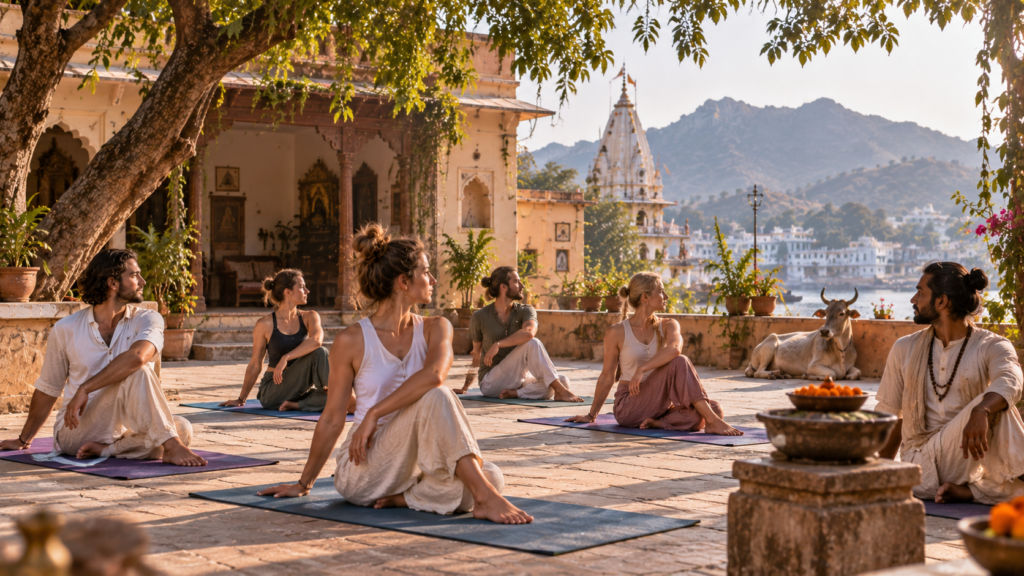
Yoga Philosophy and Traditional Learning
Yoga philosophy adds another dimension to a yoga holiday. Instead of focusing only on postures, students can spend time learning about ideas connected with traditional yoga.
Sanatan Yog currently lists a dedicated yoga philosophy session from 4:30 to 6:00 PM.
For visitors staying several days, regular philosophy sessions can become part of the daily routine. The subject can also provide useful cultural context for practices such as meditation, mantra, and kirtan.
Kirtan and Mantra Chanting
Evening kirtan provides a different experience from a physical yoga class.
Sanatan Yog currently lists a 7:00–8:00 PM kirtan session based on mantra chanting.
Visitors who are new to kirtan can observe before joining. Participation can remain simple, allowing travellers to experience the musical and communal side of the tradition without treating it as another exercise session.
Yoga Classes or a Retreat?
A short visit and a dedicated retreat can offer very different experiences.
Someone travelling through Rajasthan may prefer a drop-in class. In contrast, a traveller with several free days can settle into a more regular routine through a retreat.
Sanatan Yog currently offers daily drop-in classes and retreat formats that include 1-day, 3-day, 5-day, 7-day, and 10-day experiences.
| Travel Plan | Possible Format | Main Focus |
|---|---|---|
| Short visit | Drop-in class | One specific yoga practice |
| 1 night | Short retreat | Yoga, meditation and Pushkar culture |
| 3–5 days | Retreat | Regular practice and cultural activities |
| 7 days | Extended retreat | Yoga, meditation and philosophy |
| 10 days | Longer immersion | Daily practice, philosophy and cultural experiences |
Exact schedules and inclusions can change, so the current package should be checked before booking.
The One-Day Pushkar Retreat
Sanatan Yog currently lists a one-day/one-night retreat designed for travellers with limited time. The published package includes two guided yoga sessions, meditation and pranayama, kirtan, aarti, an ashram visit, one night’s accommodation, three vegetarian meals, and access to the listed resort facilities.
The schedule also allows visitors to join an optional Ashtanga session or use that time for breakfast and preparation for checkout.
This type of short program can fit into a wider Rajasthan itinerary without requiring a week-long commitment.
What Does a Longer Retreat Look Like?
A longer retreat creates more space for routine.
Sanatan Yog’s published 10-day schedule includes morning Hatha Yoga, meditation and pranayama, an optional Ashtanga session, rest, meals, yoga philosophy, evening Hatha Yoga, music, kirtan, and aarti. One day also includes a Pushkar visit and Pushkar Lake Aarti.
The published retreat page also lists different inclusions for 3-, 5-, and 10-day programs, including asana practice, meditation, philosophy, mantra chanting, kirtan, cultural activities, accommodation, and selected Ayurvedic services.
A longer stay does not mean every traveller needs to attend every session. Rest and personal time remain important parts of a comfortable retreat.
Comparing Yoga Destinations in India
Each destination has a different character. The table below is a practical way to compare the settings without treating one location as universally suitable.
| Destination | Yoga / Wellness Focus | Surrounding Experience |
|---|---|---|
| Rishikesh | Yoga, meditation and ashram culture | Ganga and Himalayan setting |
| Mysuru | Ashtanga and structured practice | South Indian heritage and city life |
| Kerala | Yoga and Ayurveda | Beaches, backwaters and greenery |
| Varanasi | Yoga and spiritual culture | Ghats, temples and historic city life |
| Goa | Yoga and coastal wellness | Beaches and relaxed travel |
| Pushkar | Traditional yoga and meditation | Rajasthan culture, lake and temples |
The most suitable destination depends on your preferred practice and the type of holiday you want to create.
Planning Your Yoga Trip
A little preparation can make the trip much smoother.
Check the Teaching Style
Read the current class descriptions and confirm whether the centre teaches the style you want.
Review the Schedule
Look at the time between sessions. A packed schedule can leave little room for meals, rest, or sightseeing.
Confirm Accommodation
Check whether accommodation is included and whether the room type fits your needs.
Ask About Food
Vegetarian meals are common at many yoga retreats, but individual dietary needs should be discussed before arrival.
Check Travel Connections
Look at the nearest airport or railway station and the transport available from there.
Read Booking Terms
Payment, cancellation, refund, and package terms can differ between centres.
These checks are especially useful when planning where to do yoga in India for a longer stay.
What to Pack
A yoga trip usually needs simple travel essentials rather than specialist equipment.
Pack comfortable yoga clothing, walking shoes, a reusable water bottle, sun protection, personal toiletries, travel documents, and any regular medication.
A light shawl or modest clothing can also be useful when visiting temples and other traditional places.
If you need a yoga mat, check with the centre before packing one. Some facilities may provide equipment, while others may expect students to bring their own.
When to Visit
India has different climates across its regions, so there is no single ideal season for every yoga destination.
Rishikesh has a distinct seasonal pattern, and Incredible India highlights September–November and February–April as suitable periods for exploring the area and its spiritual attractions.
Kerala has a different climate and is promoted as a wellness destination with yoga and Ayurveda throughout the state.
Pushkar and Rajasthan are generally more comfortable for outdoor sightseeing during the cooler months. During hotter periods, early morning and evening activities may be more practical.
Check the local forecast before finalising your dates.
Combining Yoga With Indian Culture
One of the most interesting parts of a yoga holiday is the opportunity to experience the destination beyond the yoga hall.
In Pushkar, a visitor can combine yoga with:
- Pushkar Lake
- Temple visits
- Local markets
- Traditional food
- Kirtan and aarti
- Rajasthan’s architecture
- Nearby landscapes
Sanatan Yog’s retreat programs include cultural elements such as Pushkar sightseeing, temple visits, kirtan, aarti, and a visit to the sacred lake.
This approach creates a travel experience in which yoga and local culture become part of the same itinerary.
A Simple Yoga Holiday Schedule in Pushkar
A traveller staying several days can keep the routine simple.
| Part of Day | Activity |
|---|---|
| Morning | Hatha Yoga or meditation |
| Late morning | Breakfast and free time |
| Afternoon | Lunch, rest or sightseeing |
| Late afternoon | Yoga philosophy |
| Evening | Hatha Yoga or kirtan |
| Night | Dinner and rest |
There is no need to attend every session. Instead, select activities that fit your experience level and leave enough time to enjoy Pushkar.
Who Can Practise Yoga in India?
Yoga destinations cater to different levels, but individual classes have their own requirements.
Beginners can look for introductory Hatha sessions or retreats that specifically welcome new practitioners. Experienced students may prefer a structured Ashtanga program or longer retreat.
People with injuries or physical limitations should discuss these with the teacher before class. Advanced postures and demanding practices should never be approached simply because they are part of another person’s routine.
The same principle applies to pranayama. Learn unfamiliar techniques from a qualified instructor and follow the recommended method.
Sanatan Yog for a Pushkar Yoga Stay
Sanatan Yog offers several ways to include yoga in a Pushkar visit. Daily drop-in classes provide flexibility, while retreats create a more structured experience. The centre also offers online classes and teacher training alongside its in-person programs.
Its current location is Balmukund Ashram, Jumni Kund Road, Pushkar, Rajasthan, India. The centre lists Sanatan Guru Ji as founder and Gaurang Guru Ji as co-founder.
For travellers who want traditional yoga combined with Pushkar’s cultural setting, this creates a practical base for a short visit or a longer retreat.
Frequently Asked Questions
Rishikesh, Mysuru, Kerala, Varanasi, Goa, and Pushkar all offer different yoga experiences. Pushkar is particularly suited to travellers interested in traditional yoga alongside Rajasthan’s cultural environment.
Yes, beginners can find yoga and meditation programs in Rishikesh. The exact level depends on the individual centre and class.
Mysuru’s Gokulam neighbourhood has a strong connection with Ashtanga Yoga. Karnataka Tourism describes it as a global centre for the practice.
Yes. Pushkar, Rishikesh, Mysuru, Kerala, Goa, and Varanasi all allow travellers to combine yoga with local cultural or natural experiences.
Yes. The current schedule includes Hatha Yoga, sound healing meditation, Ashtanga Vinyasa, yoga philosophy, evening Hatha Yoga, and kirtan.
Yes. The current website lists a one-day/one-night retreat along with longer retreat options.
The current one-day retreat is described as suitable for all levels, including beginners. Individual class suitability should still be confirmed with the teacher.
Final Thoughts
India offers many different answers to the question where to do yoga in India. The destination you select can shape the entire character of your trip.
Rishikesh connects yoga with the Ganga and Himalayan foothills. Mysuru has a strong Ashtanga tradition. Kerala brings yoga together with Ayurveda and tropical landscapes. Varanasi places yoga within a major spiritual and cultural city, while Goa offers a coastal setting. Pushkar adds traditional yoga to Rajasthan’s temples, lake, markets, and local culture.
Sanatan Yog provides a Pushkar-based option with Hatha Yoga, Ashtanga Vinyasa, meditation, pranayama, philosophy, kirtan, daily classes, and retreat programs.
Rather than treating yoga destinations as interchangeable, look at the practice, schedule, location, accommodation, and cultural experience each one offers. That approach makes it easier to build a yoga holiday that fits your own travel plans.
