

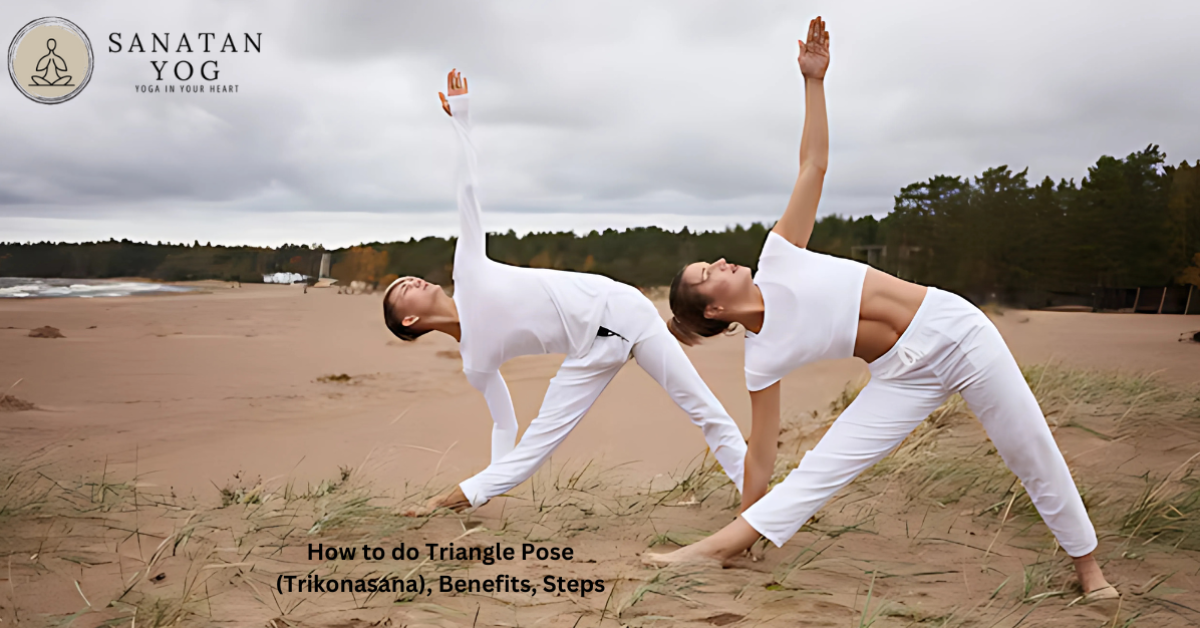
Yoga is more than physical exercise—it is a practice that helps create balance between the body, mind, and breath. Among the many traditional yoga postures, Trikonasana is one of the most effective standing poses for improving flexibility, stability, and posture. It is widely practised in Hatha Yoga because it stretches multiple muscle groups while encouraging proper body alignment.
Whether you are a beginner or an experienced practitioner, this posture can become an important part of your daily yoga routine. With regular practice, it helps increase body awareness, strengthens the legs, improves spinal mobility, and supports better overall balance.
In this guide, you will learn the meaning of the pose, its benefits, the correct technique, and important precautions so you can practise safely and confidently.
What Is Trikonasana?
Trikonasana, commonly known as the Triangle Pose, is a classic standing yoga posture that creates a triangular shape with the body. It combines stretching, balance, and controlled breathing to improve flexibility and stability at the same time.
This pose is included in many traditional Hatha Yoga and Yoga Teacher Training programmes because it works on the entire body rather than focusing on a single muscle group. It also prepares the body for more advanced standing postures.
Meaning and Origin of Trikonasana
The word Trikonasana comes from two Sanskrit words: Trikona, meaning “triangle,” and Asana, meaning “posture” or “pose.” Together, the name describes the triangular shape formed by the legs, torso, and arms during the practice.
The pose has been practised in traditional yoga systems for many years and remains an important part of Hatha Yoga because of its physical, mental, and energetic benefits.
| Sanskrit Word | Meaning |
|---|---|
| Trikona | Triangle |
| Asana | Yoga posture |
| Trikonasana | Triangle Pose |
How to Practice Trikonasana Step by Step
Practising the pose with proper alignment is important to receive its full benefits and reduce the risk of strain. Move slowly and coordinate every movement with your breath.
Step 1: Start in a Standing Position
Stand tall with your feet comfortably apart and your spine straight. Relax your shoulders and distribute your body weight evenly on both feet before beginning the posture.
Step 2: Extend Your Arms
Raise both arms until they are parallel to the floor, keeping your palms facing down. Maintain an open chest and avoid lifting your shoulders towards your ears.
Step 3: Turn One Foot Outward
Rotate your right foot about 90 degrees while turning the left foot slightly inward. Keep both legs active and grounded to create a stable base.
Step 4: Bend from the Hip
While inhaling, lengthen your spine. As you exhale, gently reach towards your right side from the hip instead of bending forward. This helps maintain proper alignment throughout the pose.
Step 5: Place Your Hand Comfortably
Rest your right hand on your shin, ankle, or the floor depending on your flexibility. Extend the opposite arm towards the ceiling while keeping your chest open.
Step 6: Hold the Pose
Keep breathing slowly and steadily while maintaining the posture. Stay relaxed and avoid forcing your body beyond its comfortable range of movement.
Step 7: Return to Standing
Press firmly through your feet, inhale, and slowly lift your upper body back to the centre. Repeat the same sequence on the opposite side.
Benefits of Trikonasana
One of the reasons Trikonasana remains a popular yoga posture is that it benefits multiple areas of the body at the same time. Regular practice can improve flexibility, balance, posture, and muscular strength while encouraging better body awareness.
| Benefit | How It Helps |
|---|---|
| Flexibility | Stretches the hips, hamstrings, and side body |
| Balance | Improves stability and body coordination |
| Strength | Builds strength in the legs and core |
| Posture | Encourages proper spinal alignment |
| Mobility | Supports smoother body movement |
Improves Flexibility
This posture gently stretches the hamstrings, hips, groin, shoulders, and sides of the body. Over time, regular practice can increase mobility and reduce stiffness caused by prolonged sitting or inactivity.
Improved flexibility also supports better movement during daily activities and helps practitioners perform other yoga postures more comfortably.
Strengthens the Legs and Core
While the pose appears simple, it requires continuous engagement of the legs, hips, and abdominal muscles. This activation helps develop lower-body strength while improving overall stability.
A stronger foundation supports better posture and reduces unnecessary pressure on the lower back during everyday movements.
Supports Better Balance and Stability
Maintaining proper alignment during the posture challenges both physical balance and mental focus. As practitioners become more familiar with the pose, they often notice improved coordination and greater body awareness.
These improvements are valuable not only in yoga practice but also during everyday activities that require stability and controlled movement.
Encourages Healthy Posture
Poor posture has become increasingly common due to long hours of sitting and screen use. This standing pose encourages the spine to lengthen while opening the chest and shoulders.
With regular practice, it helps develop better postural awareness, allowing the body to maintain a more natural and comfortable alignment throughout the day.
Muscles Worked in Trikonasana
One of the reasons Trikonasana is widely practised is that it engages several muscle groups at the same time. Instead of isolating one area, the pose encourages the entire body to work together, improving both strength and flexibility.
During the posture, the legs remain active for stability while the core supports balance. At the same time, the spine, shoulders, hips, and side body experience a gentle stretch that enhances overall mobility.
| Muscle Group | Role in the Pose |
|---|---|
| Hamstrings | Improve flexibility |
| Quadriceps | Support leg stability |
| Core Muscles | Maintain balance |
| Obliques | Stretch and strengthen the sides |
| Shoulders | Improve mobility and posture |
| Hip Muscles | Increase flexibility and stability |
Common Mistakes to Avoid
Learning the correct alignment is essential for practising safely. Many beginners make small mistakes that reduce the effectiveness of the posture and may cause unnecessary discomfort.
Paying attention to body alignment and moving with control helps you receive the full benefits while protecting your joints and muscles.
| Common Mistake | Better Approach |
|---|---|
| Rounding the back | Keep the spine long and straight |
| Locking the front knee | Maintain a gentle bend if needed |
| Leaning forward | Extend sideways before lowering |
| Forcing the stretch | Stay within a comfortable range |
| Holding the breath | Breathe slowly and naturally |
Who Should Avoid Trikonasana?
Although Trikonasana is suitable for many practitioners, it may not be appropriate for everyone. People with recent injuries or certain medical conditions should seek guidance from a qualified yoga teacher or healthcare professional before practising.
Those experiencing severe back pain, hip injuries, knee injuries, or balance-related conditions should modify the posture or avoid it until they receive proper advice.
Precautions Before Practising
Safe practice is more important than achieving a deeper stretch. Always begin with a gentle warm-up to prepare the muscles and joints before entering standing postures.
Move slowly, avoid sudden movements, and never force your body beyond its natural range of motion. If you experience pain instead of a comfortable stretch, gently return to a neutral position.
Best Time to Practice Trikonasana
The ideal time to practise Trikonasana is in the morning when the body feels fresh and the mind is calm. Practising on an empty stomach or a few hours after a meal helps improve comfort and concentration.
If morning practice is not possible, the posture can also be included in an evening yoga session to release tension that builds up during the day.
| Practice Time | Benefit |
|---|---|
| Morning | Improves energy and flexibility |
| Evening | Relieves stiffness and stress |
| Empty Stomach | Supports comfortable movement |
Trikonasana for Beginners
Beginners should focus on proper alignment rather than trying to reach the floor. Using a yoga block or resting the lower hand on the shin can provide better support while maintaining correct posture.
Practising consistently under proper guidance helps improve confidence, flexibility, and balance over time. As the body becomes stronger, the posture naturally becomes deeper without forcing the movement.
Why Learn Trikonasana from Traditional Yoga Teachers?
Learning yoga from experienced teachers helps ensure that every posture is practised safely and correctly. Traditional instruction focuses not only on physical alignment but also on breathing, awareness, and mindful movement.
Receiving personal guidance helps practitioners build a strong foundation while reducing the risk of developing incorrect habits during practice.
Experience Authentic Yoga with Sanatan Yog
At Sanatan Yog, Trikonasana is taught as part of a traditional yoga practice rooted in authentic yogic principles. Students receive guidance on posture alignment, breathing techniques, and mindful movement so they can practise safely and confidently.
Whether you are joining a Yoga Retreat, Hatha Yoga class, or Yoga Teacher Training programme, experienced instructors help you understand the purpose of each posture while supporting your personal growth and overall well-being.
Frequently Asked Questions About Trikonasana
Trikonasana, also known as Triangle Pose, is a standing yoga posture that improves flexibility, balance, posture, and lower-body strength.
Regular practice helps improve flexibility, strengthens the legs and core, supports better posture, enhances balance, and increases body awareness.
Yes. Beginners can safely practise the pose by focusing on proper alignment and using yoga blocks or other supports if required.
Most beginners can comfortably hold the pose for 15 to 30 seconds on each side while maintaining smooth, steady breathing.
Yes. When practised with proper technique and guidance, it can be included in a regular yoga routine to support flexibility, balance, and overall mobility.
Conclusion
Trikonasana is a timeless yoga posture that offers a balanced combination of strength, flexibility, stability, and mindful awareness. Its simple appearance often hides the depth of its benefits, making it a valuable practice for beginners as well as experienced yoga practitioners.
With regular practice, correct alignment, and conscious breathing, this posture can become an important part of a healthy lifestyle. Learning Trikonasana under experienced guidance at Sanatan Yog helps you build a strong foundation while embracing the traditional principles of yoga for long-term physical and mental well-being.
