

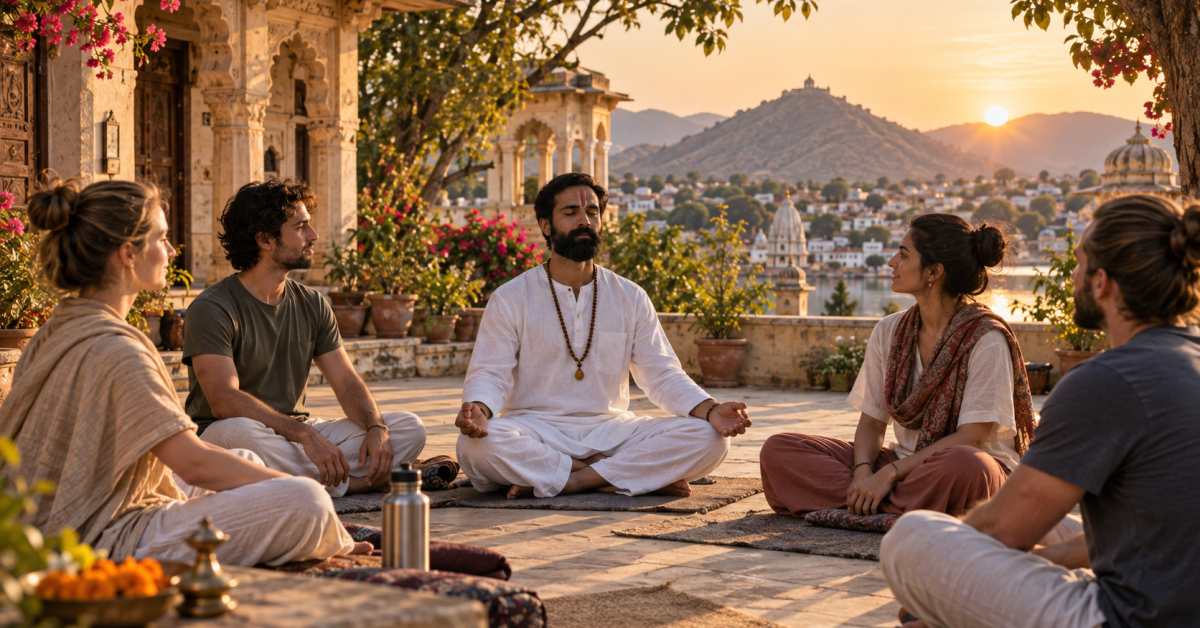
Living with ongoing stress, anxious thoughts, low mood, poor sleep, or emotional tiredness can make everyday life feel difficult. Many people also look for a quiet place where they can step away from a busy routine, spend time in nature, practise gentle movement, and create space for rest.
This has increased interest in retreats for depression and anxiety, especially experiences that include yoga, meditation, breathing practices, healthy food, and a peaceful environment. A retreat can provide supportive surroundings, but it should not be presented as a replacement for professional mental health care.
Sanatan Yog in Pushkar, Rajasthan, offers traditional Hatha Yoga, Ashtanga Vinyasa, meditation, pranayama, yoga philosophy, mantra and kirtan through classes and retreat programs. Its four-generation yoga tradition and location at Balmukund Ashram provide a setting focused on traditional practice and mindful living.
What Are Retreats for Depression and Anxiety?
Retreats for depression and anxiety are wellness stays designed around practices that may help people slow down, reduce daily distractions, and spend more time caring for their body and mind.
A retreat may include:
- Yoga sessions
- Meditation
- Breath practice
- Time in nature
- Healthy vegetarian meals
- Rest and quiet periods
- Group activities
- Spiritual or cultural experiences
The exact program differs from one retreat to another. Some focus mainly on meditation, while others combine yoga, nature, Ayurveda, creative activities, or spiritual practices.
It is important to keep expectations realistic. A yoga retreat is not the same as psychiatric care or psychotherapy. Depression and anxiety can require professional assessment and treatment. The National Institute of Mental Health notes that depression is commonly treated with psychotherapy, medication, or both, depending on the person’s needs and medical situation.
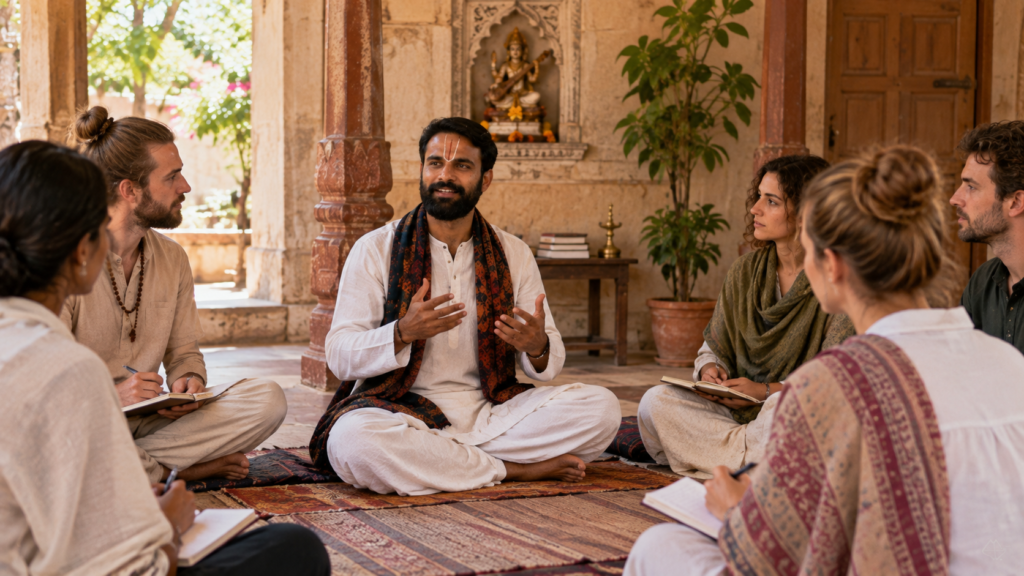
Can a Yoga Retreat Support Mental Well-Being?
Yoga combines physical movement, breathing and attention. A calm practice can become a useful part of a healthy routine, particularly when someone is dealing with everyday stress.
The NHS notes that activities such as yoga can help people relax and may help with stress, depression and anxiety. It also recommends talking with a health professional when anxiety becomes difficult to manage.
This makes retreats for depression and anxiety interesting for people who want to add supportive lifestyle practices to their existing care.
At Sanatan Yog, traditional Hatha Yoga is part of the regular teaching program. The centre also offers Ashtanga Vinyasa, sound healing meditation, yoga philosophy and kirtan sessions.
The aim should not be to force difficult physical practice. A retreat experience can instead create a simple rhythm of movement, breathing, rest and reflection.
Hatha Yoga for a Calm Daily Routine
Hatha Yoga can be a practical part of a retreat because sessions can combine physical postures with breath awareness and stillness.
At Sanatan Yog, daily classes include Hatha Yoga in the morning and evening, along with Ashtanga Vinyasa, sound healing meditation, yoga philosophy and kirtan at different times of the day. General classes are around one to one and a half hours.
For someone attending retreats for depression and anxiety, the value may come from having a simple daily structure rather than trying to complete an intense workout.
A balanced session can provide time to move the body, pay attention to breathing, and sit quietly afterward.
Beginners should tell the teacher about injuries, physical limitations, or other concerns before taking part. There is no need to compete with other participants.
Meditation and Breath Practice
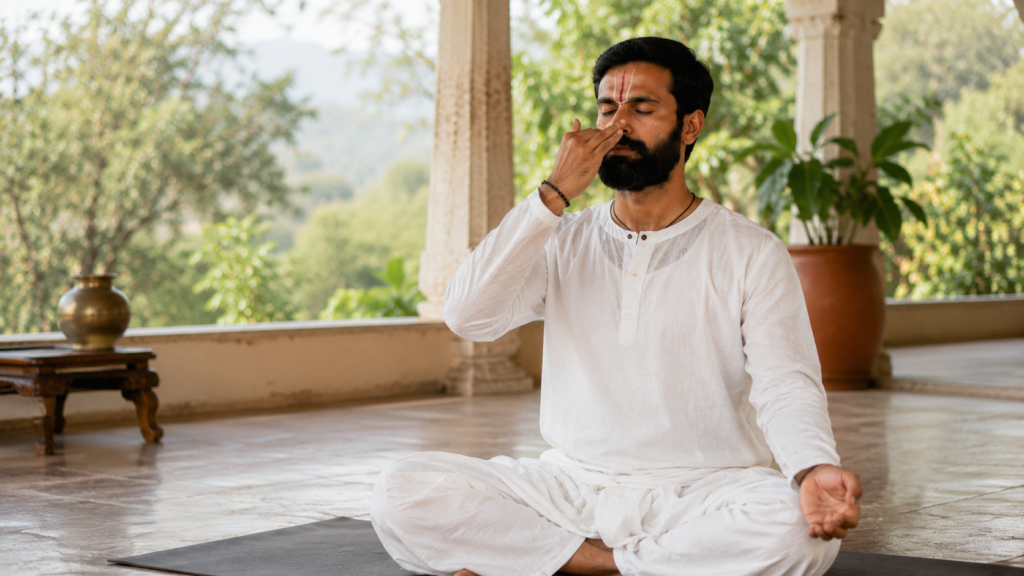
Meditation and pranayama are important parts of Sanatan Yog’s teaching.
Breath practice can bring attention back to the present moment. Meditation can also create a period without constant external stimulation.
Research and public health information do not suggest that meditation works equally well for everyone. The NHS notes that mindfulness may help with stress, anxiety and depression, but some people may find it unhelpful or even feel worse during certain practices.
For this reason, retreats for depression and anxiety should offer a supportive environment rather than promising a guaranteed emotional result.
A person who feels uncomfortable during meditation should be able to pause, speak with the retreat facilitator, or seek professional advice when needed.
What Makes Pushkar Suitable for a Yoga Retreat?
Pushkar has a strong spiritual and cultural identity. The town is known for Pushkar Lake, temples, ghats, traditional streets and its surrounding Aravalli landscape.
For a retreat participant, this setting can feel very different from a crowded city routine.
Sanatan Yog is located at Balmukund Ashram on Jumni Kund Road in Pushkar, Rajasthan. The centre combines traditional yoga teaching with the cultural atmosphere of the town.
A stay in Pushkar can therefore include more than time on a yoga mat. Depending on the retreat program, participants may experience kirtan, aarti, temple visits, local sightseeing and other cultural activities.
This combination can make the retreat feel connected to place rather than like a standard hotel wellness package.
Retreat Practices at Sanatan Yog
Sanatan Yog’s retreat programs vary in length and activities. Its current website describes retreat options including 3-day, 5-day, 7-day and 10-day formats, along with shorter retreat experiences.
| Practice | Possible role in a retreat |
|---|---|
| Hatha Yoga | Gentle structured physical practice |
| Meditation | Quiet time and attention practice |
| Pranayama | Conscious breathing practice |
| Yoga Philosophy | Reflection on traditional yogic ideas |
| Kirtan | Group mantra and devotional music |
| Ashtanga Vinyasa | More active traditional yoga practice |
| Cultural activities | Connection with Pushkar and local traditions |
The exact activities depend on the selected retreat and current program.
A Short Retreat Can Still Create a Change of Routine
Not everyone can leave work or family responsibilities for a week. A shorter stay can provide an easier introduction to retreat living.
Sanatan Yog’s current one-day retreat is structured as one night and includes two yoga sessions, meditation and pranayama, kirtan, aarti, an ashram visit, vegetarian meals and accommodation at the listed partner resort. The program is presented as beginner-friendly.
This type of short experience may suit someone who wants to step away from routine without committing to a long stay.
However, people dealing with serious or worsening mental health symptoms should speak with a qualified healthcare professional before relying on a retreat as part of their care.
Longer Retreats and a Slower Daily Rhythm
Longer retreats for depression and anxiety can provide more time for regular practice, rest, meals and reflection.
A multi-day retreat may allow participants to develop a daily rhythm rather than attending a single class.
A typical retreat rhythm can include:
| Part of the day | Possible activity |
|---|---|
| Morning | Yoga and breathing practice |
| Late morning | Breakfast and personal time |
| Afternoon | Rest, philosophy or cultural activity |
| Evening | Yoga, meditation or kirtan |
| Night | Dinner and quiet time |
The exact schedule should always be confirmed with the retreat provider because programs can change.
The benefit of a structured routine is not that it automatically treats depression. Rather, it can give participants a temporary setting where sleep, movement, meals, social interaction and quiet time receive more attention.
Food and Rest During a Retreat
Food is another part of the retreat environment.
Sanatan Yog’s retreat information includes vegetarian or sattvic meals depending on the retreat package. The current one-day program, for example, lists three vegetarian meals.
Regular meals can make a retreat routine easier to follow. Participants should still share allergies, dietary restrictions and health-related food requirements before booking.
Rest is equally important. A retreat should not be a schedule packed with activities from morning until night. Personal time allows the body and mind to settle between sessions.
Retreats Are Not a Replacement for Mental Health Treatment
This point is especially important when discussing retreats for depression and anxiety.
Depression and anxiety can range from mild symptoms to serious mental health conditions. Professional treatment may involve psychotherapy, medication, or a combination of treatments.
A yoga retreat can be considered a complementary wellness experience, not a substitute for diagnosis or treatment.
If someone is already working with a psychiatrist, psychologist, therapist or doctor, they should discuss plans for a retreat with that professional when appropriate.
People taking prescribed medication should not stop or change it because they are attending a yoga retreat.
Who May Enjoy a Yoga Retreat?
Retreats for depression and anxiety may appeal to adults who want a quiet environment for yoga, meditation and rest while continuing appropriate professional care.
They may be suitable for people who:
- Want a break from a demanding routine
- Enjoy yoga or meditation
- Prefer a peaceful travel environment
- Want to spend time away from constant digital distractions
- Are interested in traditional Indian yoga
- Want to experience Pushkar’s spiritual culture
- Prefer a structured daily wellness routine
The suitability of a retreat depends on the individual’s physical and mental health.
Someone experiencing severe symptoms, a mental health crisis, or thoughts of self-harm should seek professional or emergency support rather than travelling to a wellness retreat as their main source of help.
How to Select a Safe and Suitable Retreat
When comparing retreats for depression and anxiety, look beyond beautiful photographs and promises of transformation.
Check what is actually included.
Ask about:
- Teachers – Find out who leads yoga and meditation sessions.
- Program structure – Check how many sessions take place each day.
- Accommodation – Confirm the exact property and room type.
- Food – Share allergies and dietary needs before booking.
- Medical support – Find out what support is available if you become unwell.
- Physical intensity – Ask whether beginners can modify practices.
- Cancellation terms – Read the current booking conditions.
- Transport – Confirm airport, railway and local transfer arrangements.
- Privacy – Ask about private rooms if personal space is important.
- Mental health needs – Speak with a qualified professional if symptoms are significant.
A responsible retreat should not promise that a few days of yoga will cure depression or anxiety.
The Sanatan Yog Approach in Pushkar
Sanatan Yog follows a traditional yoga approach rooted in a four-generation family lineage. The school says its tradition has continued since the 1940s and offers Hatha Yoga, Ashtanga, meditation, breath practice, philosophy, mantra and other yogic practices.
The founder, Sanatan Guru Ji, teaches Hatha Yoga, Ashtanga and philosophy. Gaurang Guru Ji, the co-founder, focuses on music, meditation and Hatha Yoga.
For people considering retreats for depression and anxiety, this traditional setting may be appealing because the experience is built around regular practice rather than only spa-style relaxation.
The retreat environment also provides access to Pushkar’s cultural and spiritual surroundings.
A Sample Day at a Yoga Retreat
A retreat day does not need to be complicated.
A simple routine could look like this:
Morning: Wake up, drink water or tea, and attend a Hatha Yoga session.
Late morning: Have breakfast and spend some quiet time.
Afternoon: Rest, read, walk, attend philosophy, or take part in a cultural activity.
Evening: Join meditation, another yoga session, kirtan or a similar scheduled activity.
Night: Have dinner and allow enough time for rest.
Sanatan Yog’s current daily class schedule includes morning Hatha Yoga, sound healing meditation, Ashtanga Vinyasa, afternoon yoga philosophy, evening Hatha Yoga and kirtan.
The actual retreat schedule can differ from regular drop-in classes.
Retreats for Depression and Anxiety: What Should You Expect?
It is better to expect a peaceful setting, structured yoga practice, meditation, healthy meals, cultural experiences and time away from normal routines rather than a guaranteed change in mental health.
Some people may feel refreshed after spending time in a quiet environment. Others may find that difficult emotions become more noticeable when they slow down.
Both responses are possible.
A retreat should therefore be treated as one part of personal wellness rather than a standalone medical solution.
For someone already receiving mental health treatment, a retreat may fit alongside that care if their healthcare professional considers it appropriate.
Frequently Asked Questions
No. A yoga or wellness retreat should not be treated as a replacement for professional mental health treatment. Depression and anxiety may require psychotherapy, medication, or other clinical care depending on the person.
Yoga and regular physical activity can support relaxation and may help with stress and anxiety. The NHS lists yoga among activities that can help people relax.
Yes. Sanatan Yog lists meditation and breath practice among its traditional offerings. Its retreat programs also include meditation and pranayama.
The current one-day retreat is described as beginner-friendly and suitable for all levels. Participants should still communicate physical limitations or relevant health concerns before taking part.
Sanatan Yog is located at Balmukund Ashram, Jumni Kund Road, Pushkar, Rajasthan, India.
Sanatan Yog currently lists several retreat formats, including shorter experiences and multi-day options such as 3-day, 5-day, 7-day and 10-day retreats. Programs and availability can change, so current details should be confirmed before booking.
No. Prescribed medication should not be stopped or changed because of a retreat. Any medication decision should be discussed with the prescribing healthcare professional.
Final Thoughts
Retreats for depression and anxiety can offer a peaceful break from daily routines through yoga, meditation, breathing practices, rest and meaningful surroundings. They can be valuable as part of a wider approach to well-being, but they should not be presented as a cure for mental health conditions.
Sanatan Yog offers a traditional yoga environment in Pushkar, with Hatha Yoga, Ashtanga, meditation, pranayama, philosophy, mantra and retreat experiences rooted in its long family tradition.
For anyone dealing with persistent depression or anxiety, professional support remains important. A retreat can then be considered as a supportive experience alongside appropriate care, provided it is suitable for the individual’s circumstances.
