

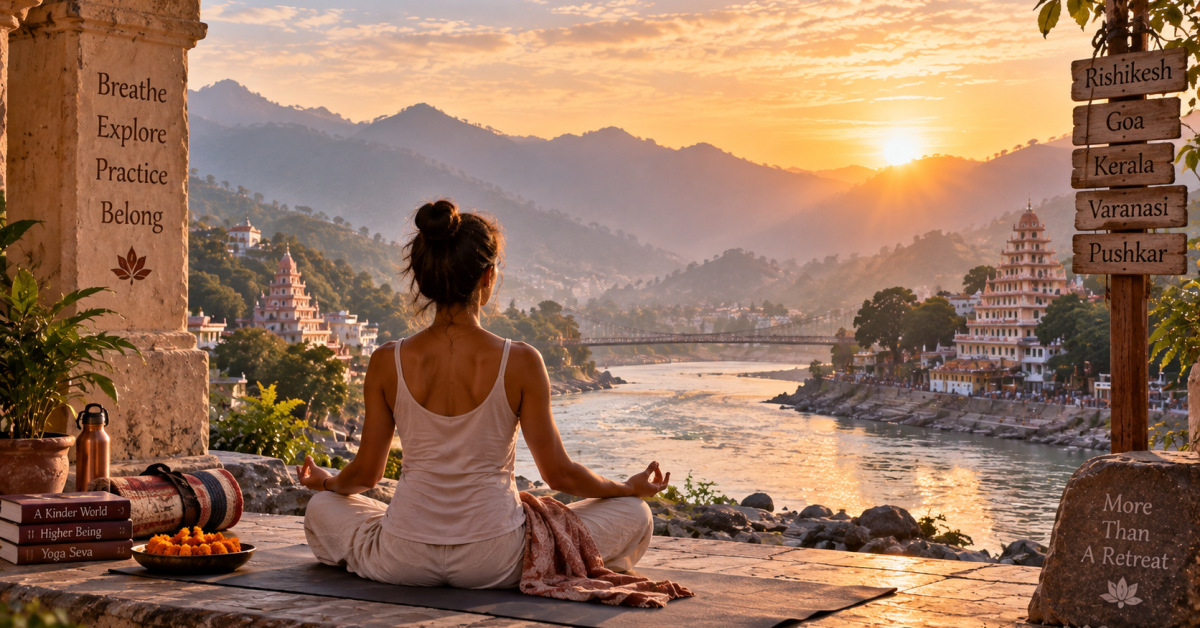
I get asked this a lot. Where should I actually go for a yoga retreat in India? And honestly, there isn’t one right answer. It depends what you’re after. Someone chasing intensity and mountain air wants a completely different trip than someone who just wants to lie on a beach and stretch in the morning.
So here’s my rundown — a real answer to which places are best for a yoga retreat in India — the spots that actually come up when people talk about it, plus one that almost nobody mentions but probably should.
Why India Is the Best Place for a Yoga Retreat
Look, yoga started in India. Not in a studio in LA, not on Instagram. Here. And that matters more than people think when you’re booking your first one. You end up learning from someone whose family has been doing this for decades, sometimes generations. Plus it’s cheaper than Bali or wherever else people go. Sattvic food, no wifi pressure, mornings that don’t start with your phone buzzing — you start to get why people come back different.
Rishikesh: For a Spiritual, Mountain-Based Retreat
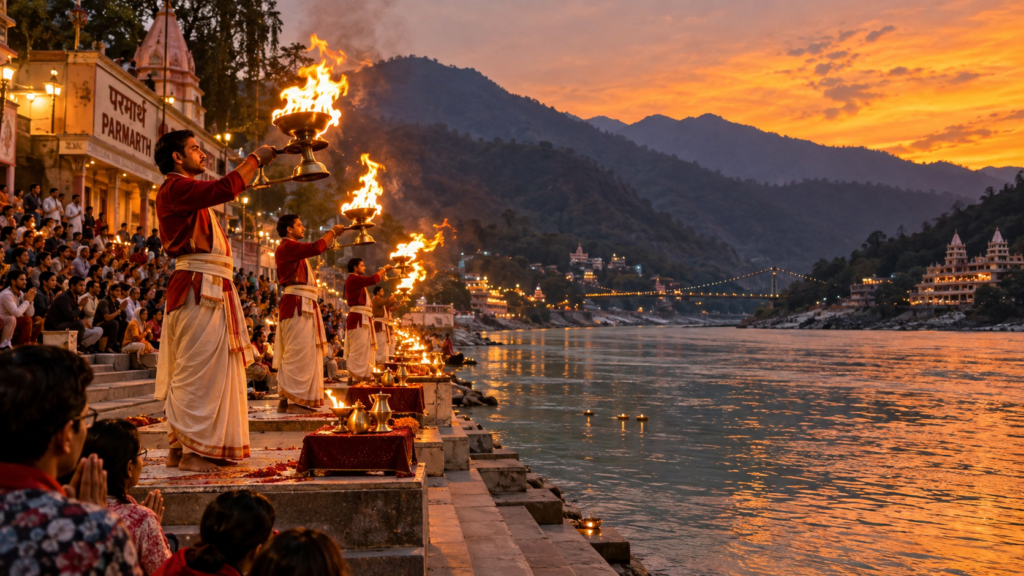
Everyone’s heard of this one. Sits right where the Ganges comes down out of the Himalayas. The river alone does half the work honestly. You’ve got ashrams stacked along the bank, yoga schools on every corner practically, and at night there’s Ganga Aarti — a fire ceremony on the water. Hard to explain until you’ve sat through it once.
If you want your retreat to feel serious, spiritual, maybe a little intense — this is your spot. So many schools operate here that it’s actually worth shopping around a bit before picking one.
Winters get properly cold up there though, so pack layers if you’re going between December and February. Summers, on the other hand, turn brutal by May. Spring and autumn are when most people actually show up.
Goa: For a Beach-Style Retreat
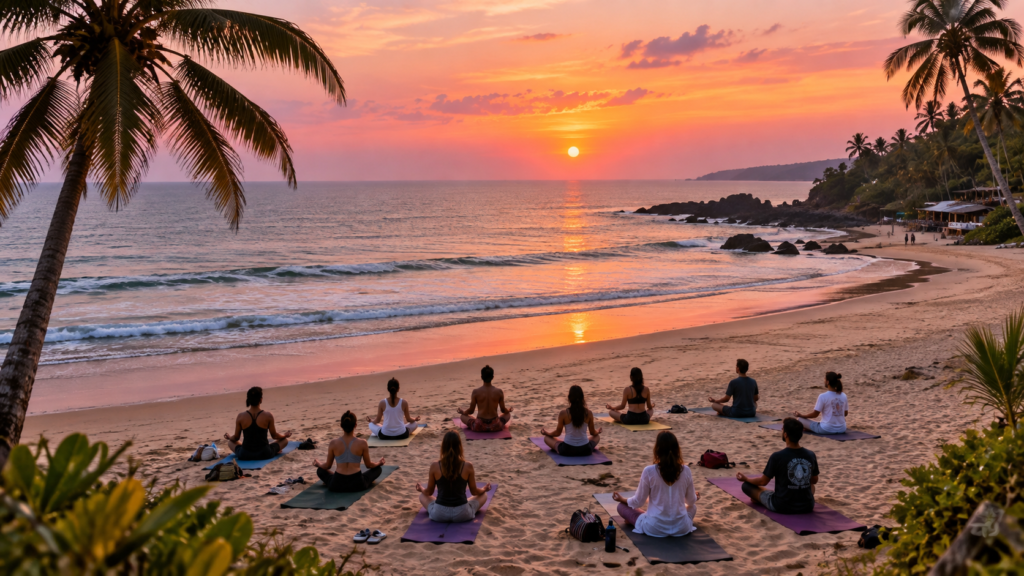
Not everyone wants mountains and 6am wake-up bells. Some people want sand between their toes while they do their sun salutations, and that’s Goa. Old Portuguese vibe to the towns, better coffee than you’d expect, slower pace generally. Classes here often end with a beach walk instead of a temple visit. A lot of first-time teacher trainees pick Goa because it just feels less intimidating.
Anjuna and Arambol tend to pull the yoga crowd more than the party-heavy south. Worth knowing before you book a place near the wrong beach.
Kerala: Yoga Paired With Ayurveda
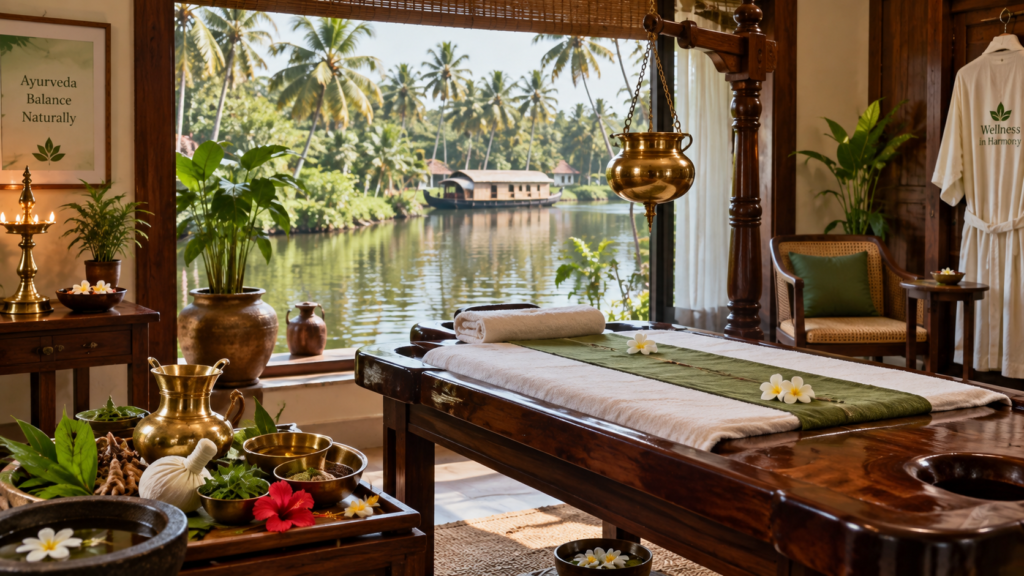
Different animal entirely. Kerala pairs the yoga with Ayurveda — India’s older medicine system, oils and herbs and all that. Backwaters, palm trees everywhere, quiet beaches. If part of why you’re going is to detox or deal with some physical thing alongside the yoga itself, Kerala tends to do this better than most other places.
Prices tend to run a touch higher here than up north, mostly because the treatments themselves aren’t cheap to run. Worth it if that’s genuinely what you’re after, less so if you just want daily asana and simple meals.
Varanasi: For Stillness Over Structure
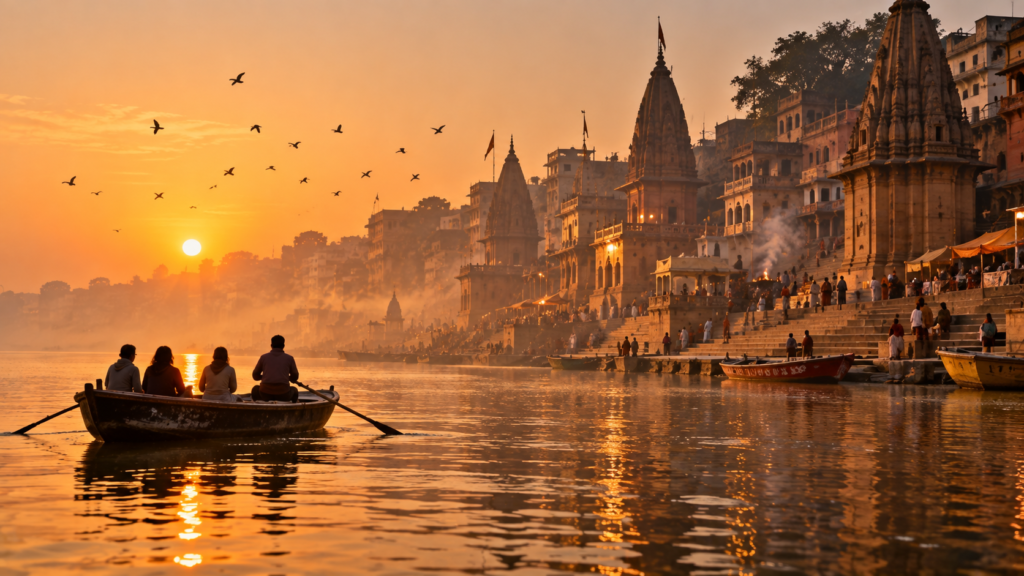
One of the oldest cities on earth, still running. Massive weight here for Hindus — funeral pyres burning on the same ghats where people are bathing each morning, life and death just sitting next to each other, no drama about it. A retreat here isn’t really about nailing your poses. It’s watching sunrise over the river and sitting through rituals that haven’t changed in centuries. More reflective than active, this one.
Boat rides at dawn are basically mandatory here, even if nobody puts it on the itinerary. You’ll figure that out fast once you see the ghats lit up before sunrise.
Pushkar, Rajasthan: An Underrated Yoga Retreat in India (SanatanYog)
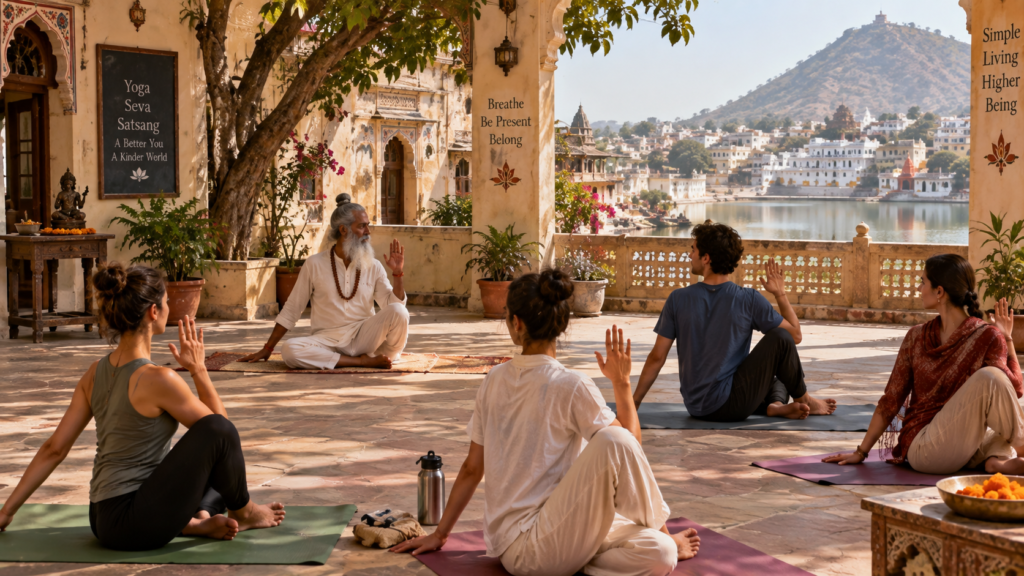
This is the town that never makes the “top 5” lists, which honestly feels like an oversight. Small desert town, Rajasthan, sitting beside a lake that legend says formed when Lord Brahma dropped a lotus flower. Slower than Rishikesh, slower than Goa. Fewer tourists. Narrow lanes that haven’t changed much in a long time.
There’s a place here called SanatanYog, run out of Balmukund Ashram, that’s worth knowing if you’re considering something in this area. What makes it different — the family teaching there has been at it for four generations. Not a weekend certification thing. You get Hatha and Ashtanga Vinyasa, guided meditation, sound healing in the evenings, Kirtan, and food cooked by the actual ashram family. They also take guests around town — the lake, the evening Aarti, and some spots that most visitors never even stumble across on their own.
Pushkar’s close enough to Jaipur and Ajmer too, so tacking on a few days for forts and palaces isn’t hard. If “small and family-run” sounds better to you than “big and polished,” SanatanYog is worth a message before you commit somewhere else.
How to Choose the Right Yoga Retreat in India
Too many options, I know. Few things to actually think through when you’re figuring out which places are best for a yoga retreat in India for you specifically.
What pace do you want — really want, not what sounds impressive when you tell people. Rishikesh and Varanasi are structured, spiritual, a bit heavy. Goa’s looser, more social. Pushkar, through places like SanatanYog, sits in between somewhere — traditional but not rushed.
Read what’s actually included before you pay anything. Meals, room type, how many nights, the daily schedule. If a center can’t give you straight answers on this stuff, that tells you something about how the rest of the trip will go.
Be honest with yourself about your level. Daily Ashtanga is a completely different beast from gentle beginner Hatha. Match the retreat to where you actually are.
Check who’s teaching. Anyone can slap a certificate on a wall after one weekend course. A teacher with real lineage behind them — like SanatanYog’s family, generations deep — usually brings something a quick course can’t fake.
And think about how many days. Three days is a quick reset. Five to ten gives you enough time to actually settle in and feel something shift before you leave.
One more thing nobody tells you upfront — cancellation policies vary wildly between places. Some centers will happily reschedule you for free, others hold firm on non-refundable deposits. Get this in writing before you send any money, no matter how legit the place looks online.
Final Thoughts on the Best Yoga Retreat in India
There’s no single “best” answer to which places are best for a yoga retreat in India, because it depends entirely on what you’re chasing. Rishikesh gives you intensity. Goa gives you a beach and a slower clock. Kerala pairs everything with healing. Varanasi is stillness more than exercise. And Pushkar — quieter than people expect — gives you room to breathe without the crowds everywhere.
If family lineage and something that feels genuine matter more to you than a slick brochure, SanatanYog in Pushkar is worth reaching out to. Good food, patient teachers, four generations of practice behind them. One of the more grounded picks out there if you’re looking for a yoga retreat in India that actually feels real instead of staged for photos.
Frequently Asked Questions
Which places are best for a yoga retreat in India if I’m a first-timer?
Goa and Pushkar tend to feel the least intimidating for beginners — looser schedules, gentler intro to the practice, less of the intensity you’d get in Rishikesh.
How much does a yoga retreat in India cost?
Prices swing a lot depending on where you go and what’s included. Budget ashram stays can run as low as ₹2,000-3,000 a day, while more polished resort-style retreats go well beyond that. A place like SanatanYog in Pushkar sits somewhere in the middle — you’re paying for genuine teaching and home-cooked meals, not marble floors and a spa menu.
What’s the best time of year to go?
Depends on the region, honestly. Rishikesh gets bitterly cold in winter and unbearable by May, so spring and autumn work best there. Goa is nicest from November through February. Pushkar’s climate is desert-dry, so October to March is when most people show up — before the summer heat kicks in.
Do I need prior yoga experience to join?
Not really, no. Most places, including SanatanYog, run a mix of gentle Hatha alongside anything more advanced, so beginners aren’t left behind. Just be upfront about your level when you book so the schedule actually fits you.
How many days should a yoga retreat in India be?
Three days gives you a quick reset if that’s all the time you have. Five days lets you settle into a rhythm. Anything past a week and you start seeing real changes in how you sleep, eat, and think, not just in your flexibility.
What’s usually included in the package?
Meals, accommodation, and daily classes are the baseline almost everywhere. Beyond that it varies a lot — some places add sound healing, excursions, or Ayurvedic treatments, others keep it bare and simple. Always ask for the exact list in writing before you pay, since “included” means different things at different centers.
