

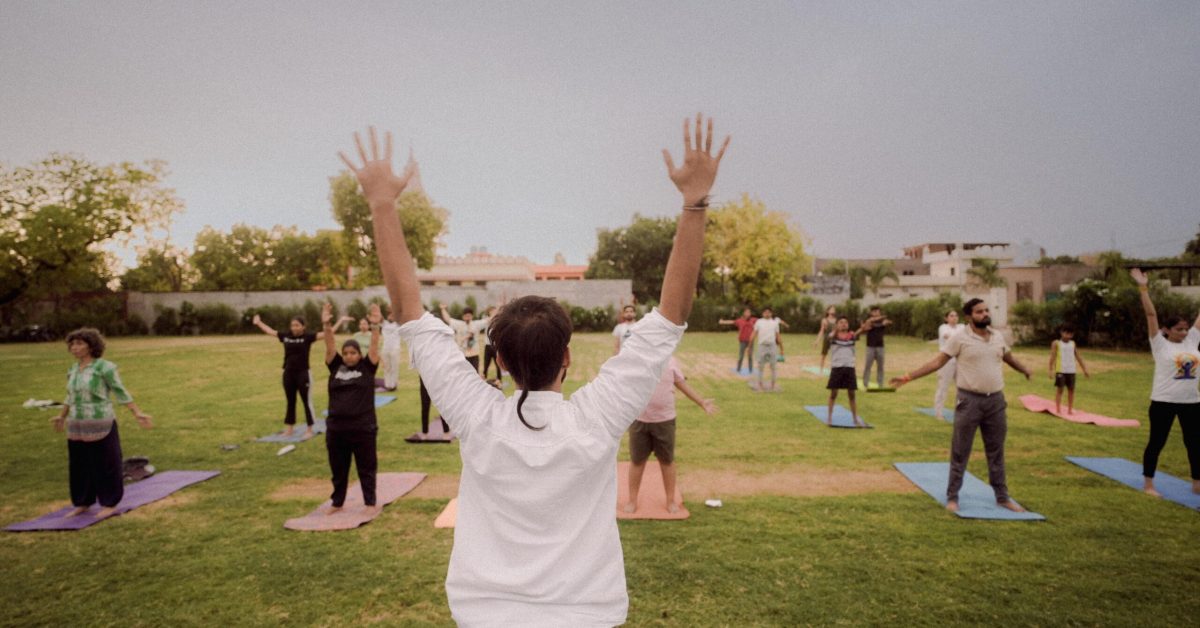
Yoga includes many standing postures that improve strength, stability, and body awareness. Vrikshasana is one of the most practised balancing poses because it combines physical stability with mental focus. The posture encourages steady breathing while helping the body remain balanced on one leg.
Regular practice can improve posture, concentration, and coordination. It is suitable for beginners as well as experienced practitioners when performed with proper alignment and patience.
What Is Vrikshasana?
Vrikshasana, commonly known as Tree Pose, is a standing yoga posture that develops balance and stability. The pose resembles the shape of a tree with one leg firmly rooted on the ground and the other placed against the standing leg.
The posture also teaches patience and body control. Instead of rushing into the pose, practitioners learn to move slowly and maintain steady breathing throughout the practice.
Meaning of Vrikshasana
The word Vrikshasana comes from the Sanskrit language. “Vriksha” means tree, and “Asana” means posture or pose. Together, the name describes a posture that reflects the strength, balance, and stability of a tree.
Trees remain firmly rooted while adapting to changing weather conditions. In the same way, this yoga posture encourages physical stability and a calm, focused mind.
| Sanskrit Word | Meaning |
|---|---|
| Vriksha | Tree |
| Asana | Pose or Posture |
| Vrikshasana | Tree Pose |
Benefits of Vrikshasana
Regular practice of Vrikshasana offers several physical and mental benefits. The pose strengthens the lower body while improving balance and posture. It also encourages better concentration by requiring steady focus throughout the practice.
Many yoga practitioners include Tree Pose in their daily routine because it develops stability without placing excessive strain on the body.
| Benefit | How It Helps |
|---|---|
| Better Balance | Improves body stability |
| Stronger Legs | Builds lower-body strength |
| Improved Posture | Encourages proper alignment |
| Better Focus | Develops concentration |
| Greater Body Awareness | Improves coordination |
How to Do Vrikshasana
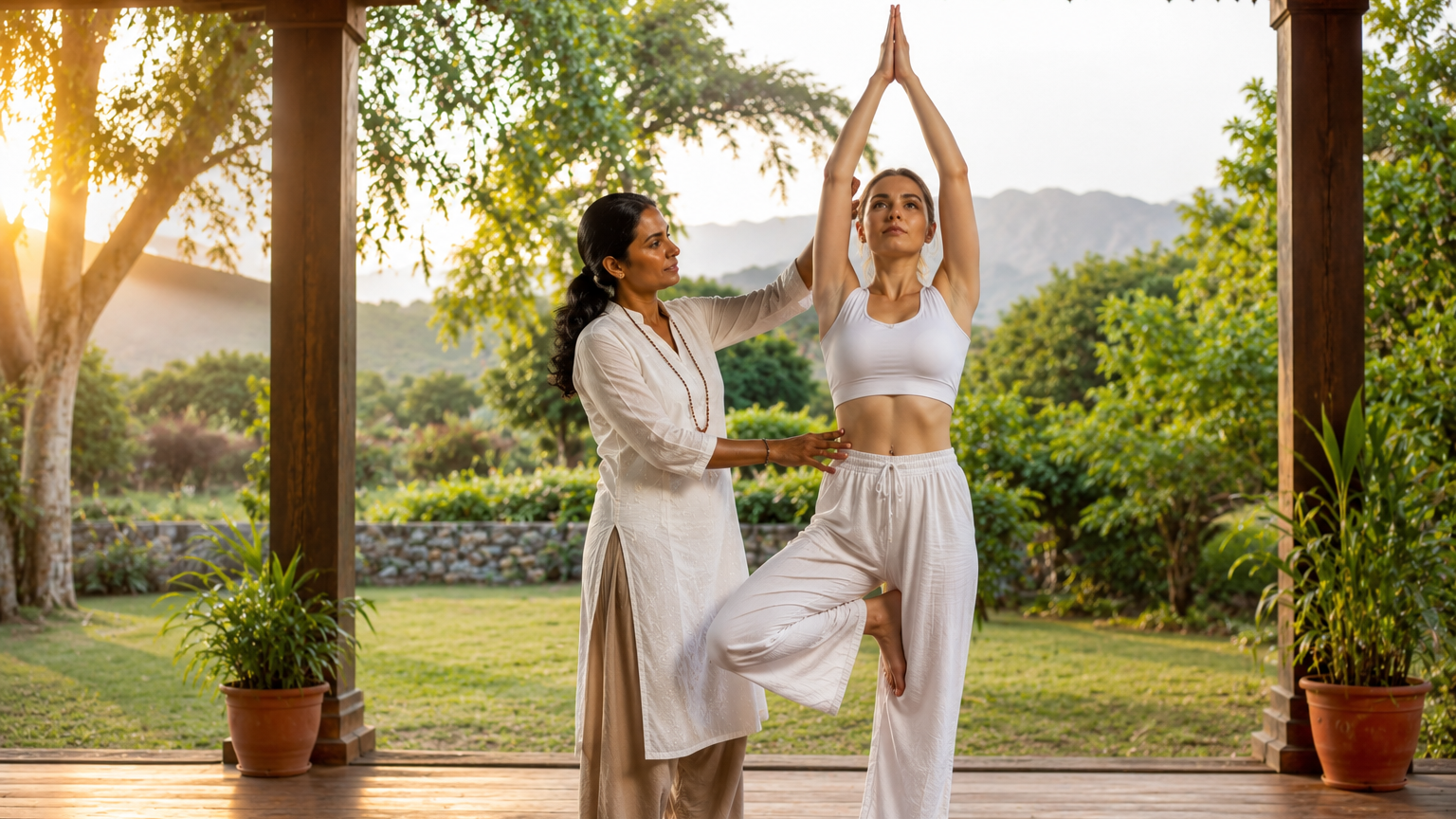
Begin by standing with your feet together and your shoulders relaxed. Shift your body weight onto one foot while keeping the standing leg steady.
Slowly place the sole of the opposite foot against the inner thigh or calf of the standing leg. Avoid placing the foot directly on the knee.
Bring your palms together in front of your chest or raise them overhead if you feel stable. Keep your gaze fixed on a single point and breathe naturally before repeating the posture on the opposite side.
| Step | Action |
|---|---|
| Step 1 | Stand tall with feet together |
| Step 2 | Shift weight onto one foot |
| Step 3 | Place the opposite foot on the inner thigh or calf |
| Step 4 | Join the palms together |
| Step 5 | Hold the posture with steady breathing |
| Step 6 | Repeat on the opposite side |
Common Mistakes to Avoid
Small alignment mistakes can reduce the effectiveness of the posture. Paying attention to proper technique helps improve balance while reducing unnecessary strain.
Avoid rushing into the pose or forcing the raised leg into position. Slow and controlled movement always produces better results.
| Common Mistake | Better Practice |
|---|---|
| Looking around | Focus on one fixed point |
| Holding the breath | Breathe slowly and naturally |
| Placing the foot on the knee | Place it above or below the knee |
| Leaning the body | Keep the spine upright |
| Rushing the posture | Move with control |
Why Proper Alignment Matters
Good alignment helps the body remain balanced while reducing unnecessary pressure on the joints. Keeping the spine long, the shoulders relaxed, and the standing leg active creates a stable foundation for the posture.
Practising Vrikshasana with correct alignment also improves confidence over time. Even if balance is difficult at first, regular practice gradually develops greater control and stability.
Muscles Worked in Vrikshasana
Vrikshasana activates several muscles at the same time. The standing leg works to maintain balance, while the core helps keep the body stable. The posture also encourages proper spinal alignment and improves overall body control.
With regular practice, these muscles become stronger and more coordinated. This makes everyday movements feel more stable and controlled.
| Muscle Group | Role in the Pose |
|---|---|
| Quadriceps | Support the standing leg |
| Calves | Improve balance |
| Glutes | Provide hip stability |
| Core Muscles | Maintain body alignment |
| Ankles | Improve stability and control |
Precautions Before Practising Vrikshasana
Although Vrikshasana is suitable for many people, it should always be practised with proper technique. Maintaining good posture and moving slowly helps reduce the risk of losing balance.
If you have a recent ankle, knee, or hip injury, seek guidance from a qualified yoga teacher before practising. Beginners may also use a wall for additional support while building confidence.
| Precaution | Recommendation |
|---|---|
| Recent Injury | Practise only after professional advice |
| Balance Difficulty | Use a wall for support |
| Knee Position | Never place the foot on the knee |
| Body Alignment | Keep the spine upright |
| Breathing | Maintain slow and steady breaths |
Who Should Avoid Vrikshasana?
Some people may need to postpone or modify this posture. Those recovering from serious lower-body injuries or experiencing severe balance problems should practise only with professional supervision.
Pregnant women and individuals with medical conditions should consult their healthcare provider before beginning any new yoga practice.
Best Time to Practise Vrikshasana
The best time to practise Vrikshasana is in the morning when the body feels refreshed and the mind is calm. Many yoga practitioners include it near the beginning of their practice after completing a gentle warm-up.
The posture can also be practised in the evening. Ensure your stomach is light and choose a quiet space where you can concentrate without distractions.
| Time | Benefit |
|---|---|
| Morning | Better focus and fresh energy |
| Evening | Helps relax after daily activities |
| After Warm-up | Improves balance and stability |
| Empty or Light Stomach | More comfortable practice |
Tips for Beginners
Learning balance takes time, so patience is important. Start by keeping your raised foot lower on the standing leg if placing it on the inner thigh feels difficult.
Focus your eyes on a fixed point in front of you. Steady breathing and regular practice will gradually improve balance and confidence.
| Tip | Benefit |
|---|---|
| Look at one point | Improves balance |
| Practise near a wall | Builds confidence |
| Move Slowly | Better body control |
| Breathe Naturally | Stay relaxed |
| Practise Regularly | Improve consistency |
Learn Traditional Yoga at Sanatan Yog
Sanatan Yog offers traditional yoga education in the peaceful surroundings of Pushkar, Rajasthan. Classes focus on correct alignment, mindful breathing, and safe practice for students of all experience levels.
Experienced teachers provide personal guidance throughout every session. This supportive environment helps students improve their practice while building confidence in each posture, including Vrikshasana.
Frequently Asked Questions
What is Vrikshasana?
Vrikshasana is a standing yoga posture, also known as Tree Pose. It helps improve balance, posture, and concentration.
Is Vrikshasana suitable for beginners?
Yes. Beginners can practise the pose with the support of a wall until they develop better balance.
How long should I hold Vrikshasana?
Most practitioners hold the posture for 20 to 60 seconds on each side while breathing comfortably.
Can Vrikshasana improve balance?
Yes. Regular practice strengthens the legs, ankles, and core muscles, which helps improve balance and stability.
Should I practise Vrikshasana every day?
Daily practice can help improve posture, coordination, and body awareness when performed with correct technique.
Conclusion
Vrikshasana is a simple yet effective yoga posture that develops balance, stability, and concentration. Regular practice strengthens the lower body, improves posture, and encourages greater body awareness without requiring advanced flexibility.
Learning the pose with proper guidance is important for achieving the best results. At Sanatan Yog, experienced teachers focus on traditional yoga principles, correct alignment, and mindful practice, helping students build a strong foundation that supports long-term progress in yoga.
